
Last updated September 10, 2026
Full 25-point door and opener safety check with every visit - springs, cables, rollers, tracks, and your LiftMaster or Chamberlain opener included
You get a price before we start. It does not change when the truck arrives.
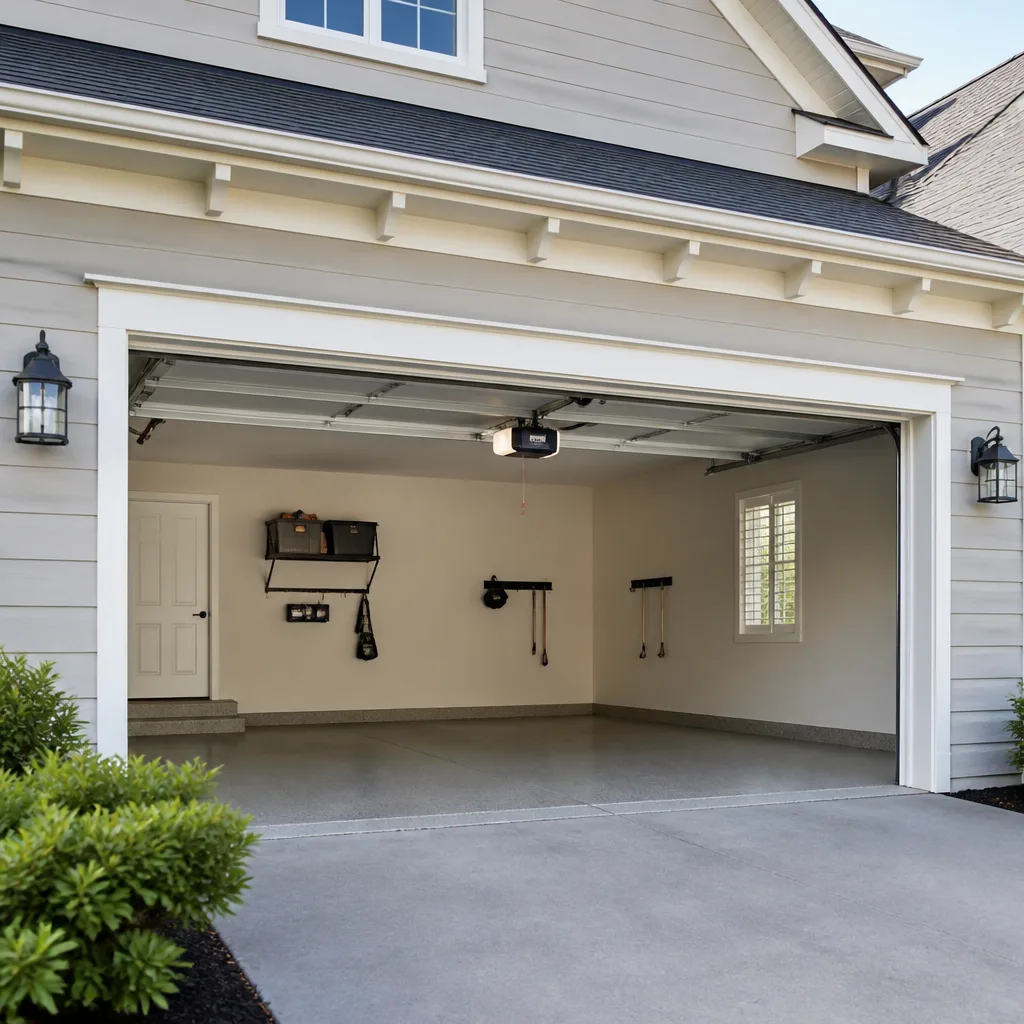
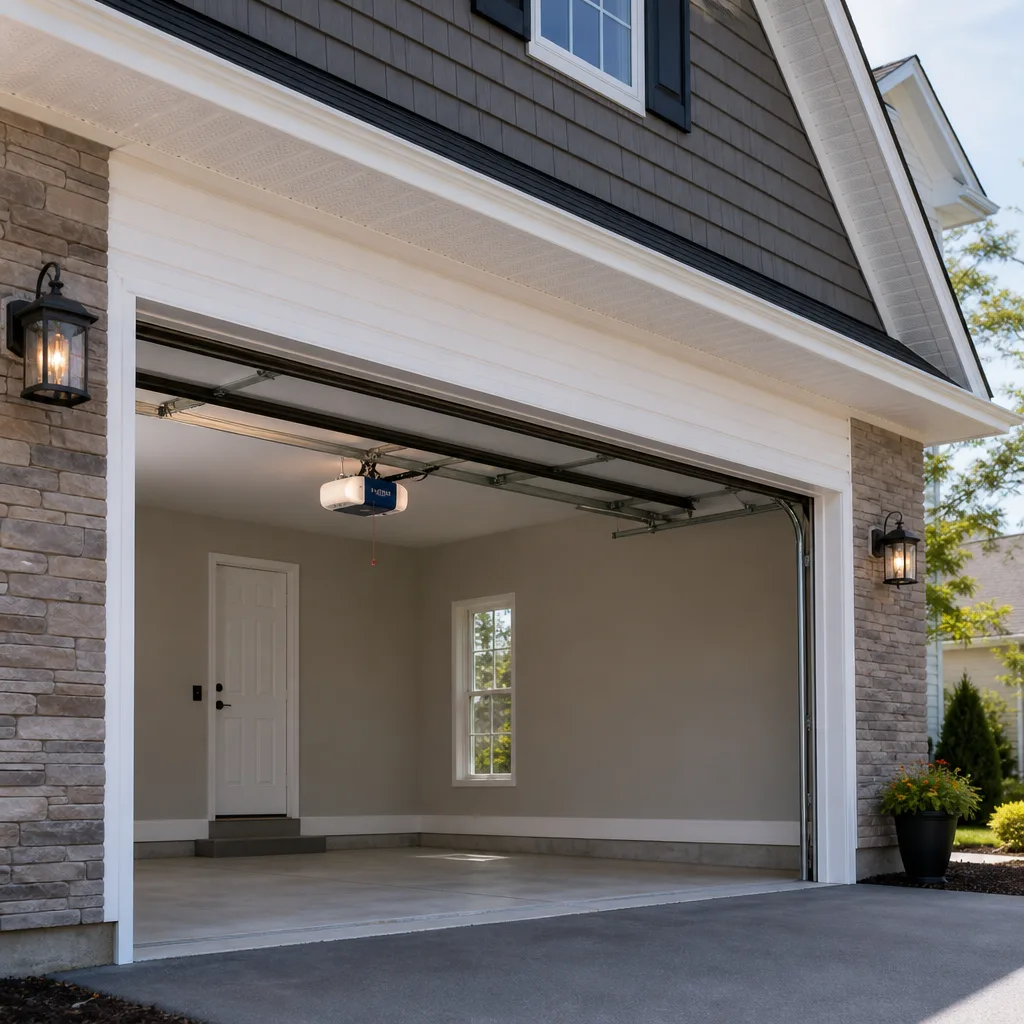
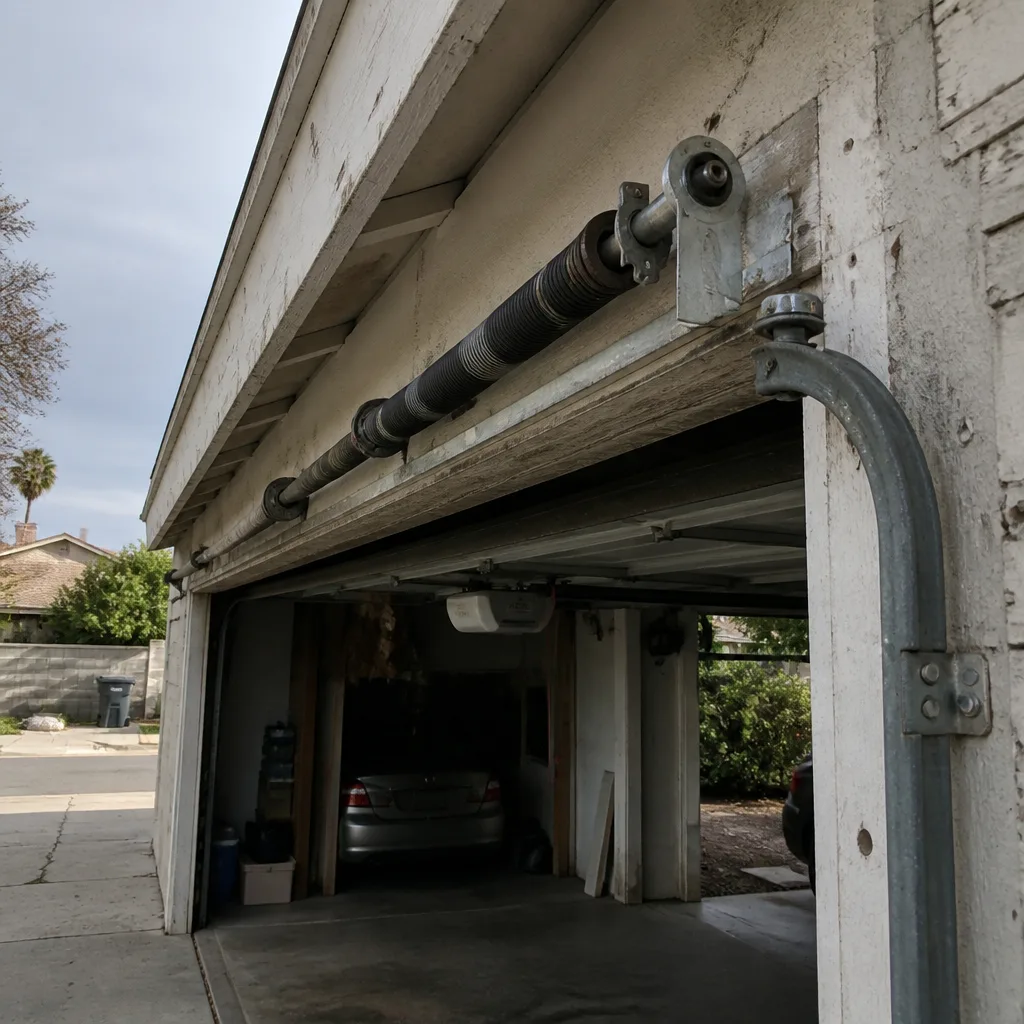 Before
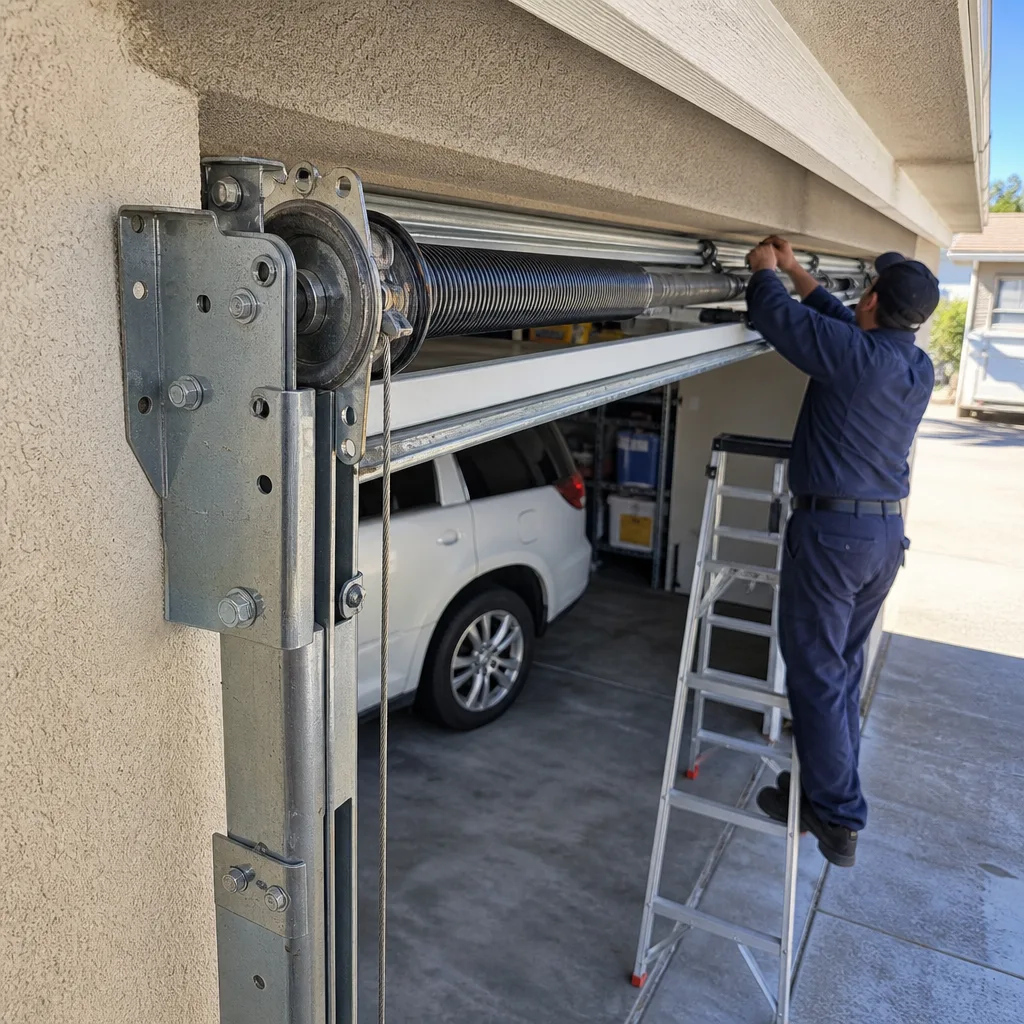 After
After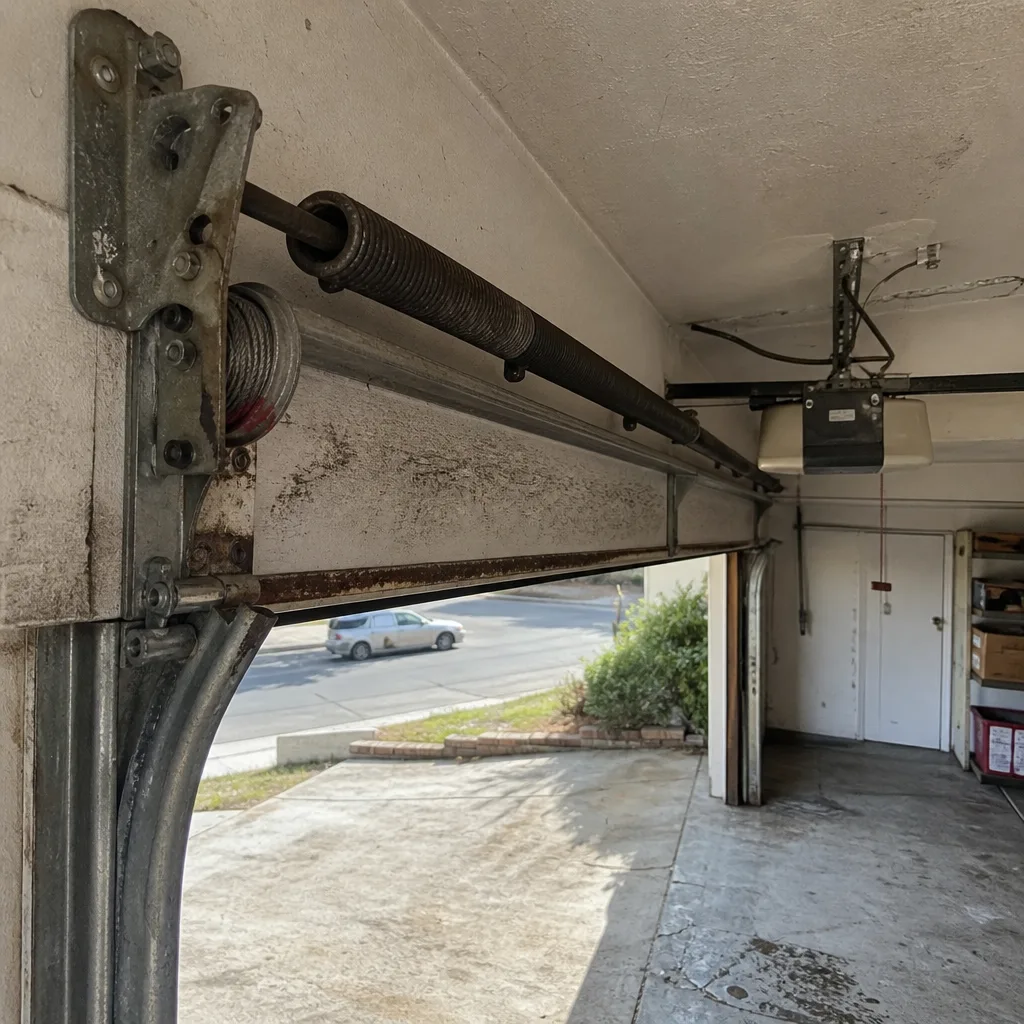 Before
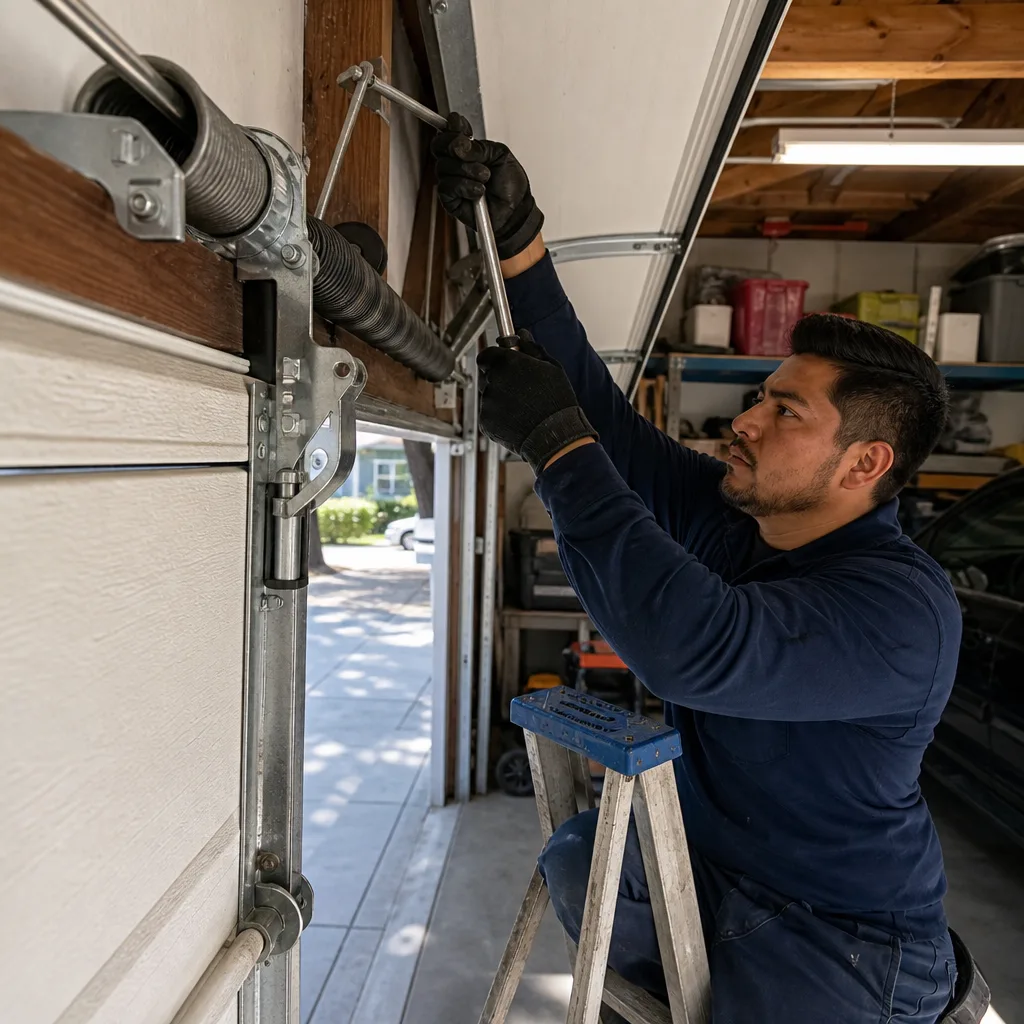 After
After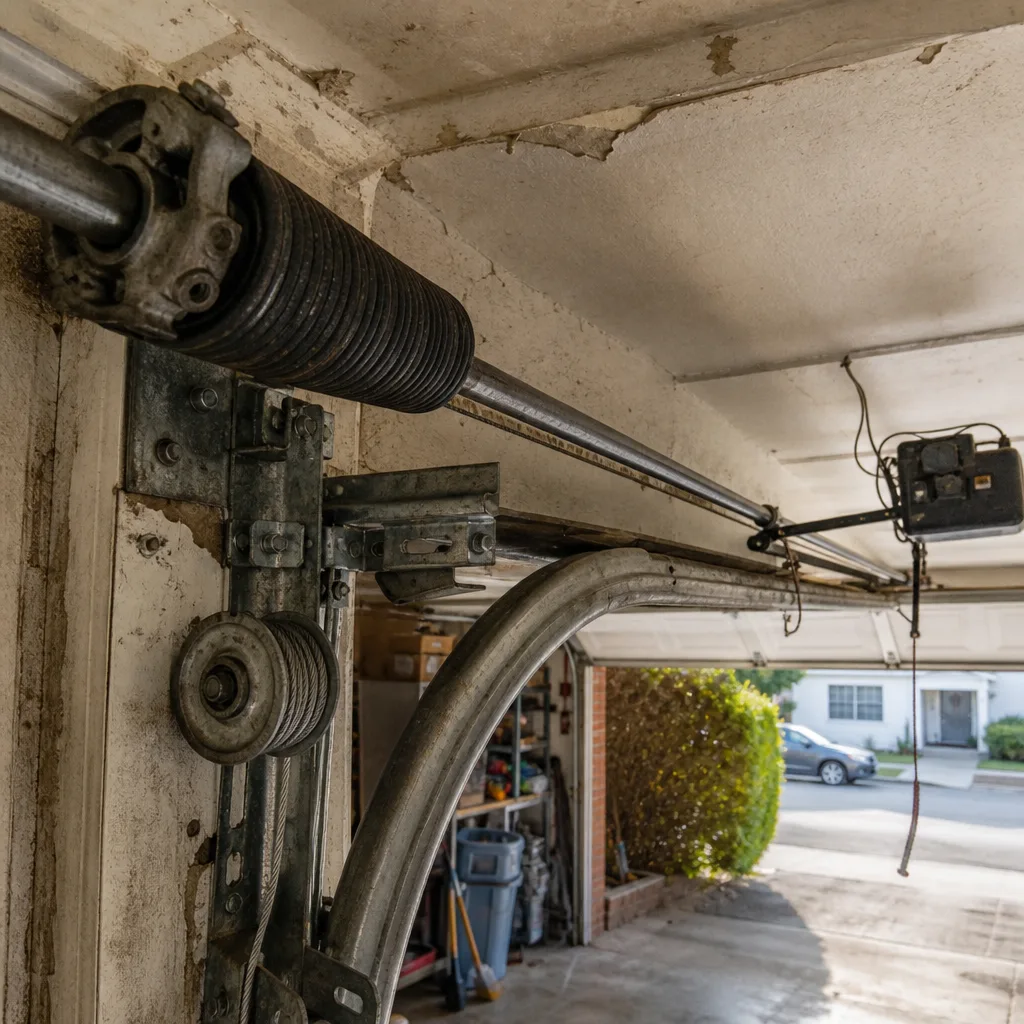 Before
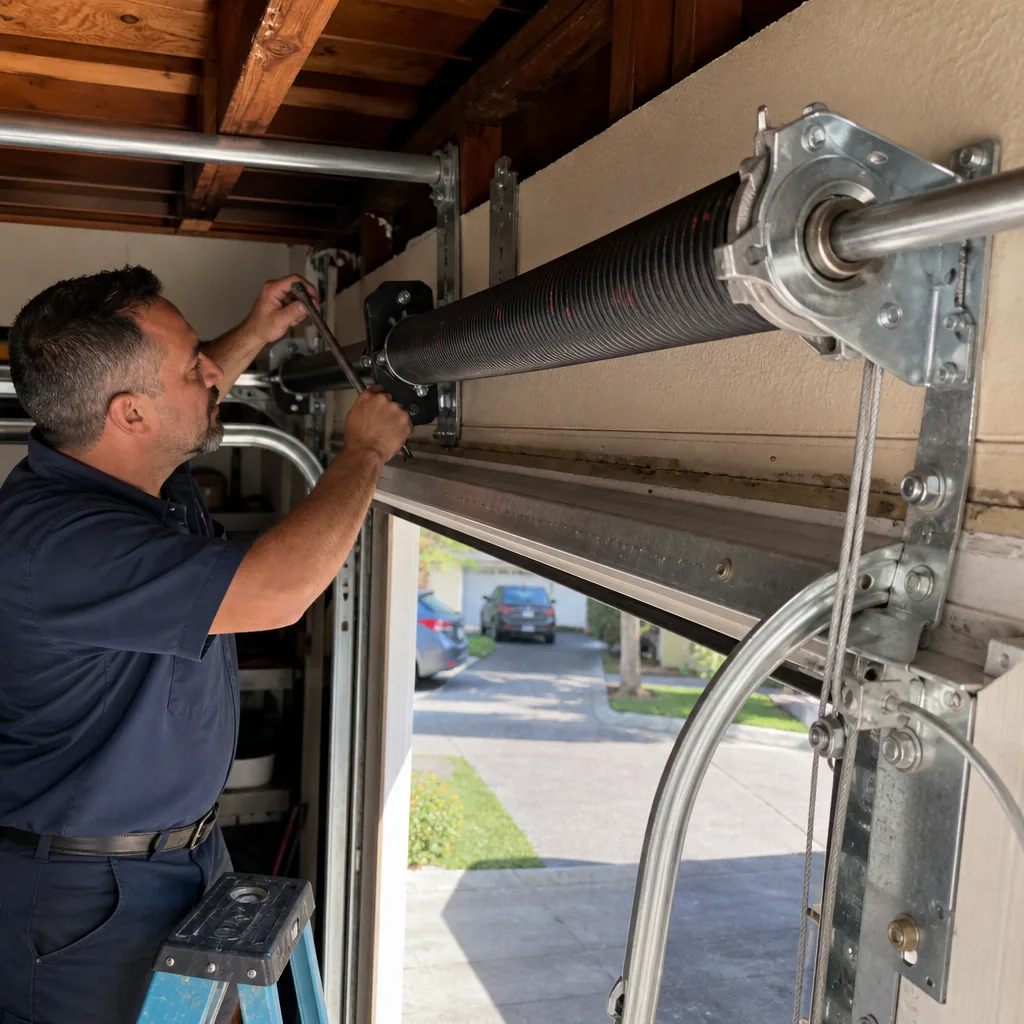 After
AfterGarage Door Warning Signs: A North Hollywood Homeowner’s Reference Guide
The cable doesn’t snap without warning. Before it goes, it frays at the drum anchor, the door develops a slight tilt on one side when it opens, and the opener motor starts running longer than it used to. Those three things happen in sequence. Almost no homeowner in North Hollywood connects them. We’ve been repairing garage doors in the San Fernando Valley since 1984, and we can tell you that every “sudden” failure we’ve responded to was preceded by at least three warning signs that went unread. This guide teaches you to read your door’s behavior as a diagnostic language, so you can call a technician before the failure, not after it blocks your car inside at 7 a.m. on a Tuesday. For more guides & resources, see our blog.
Quick Answer
The most critical garage door warning signs are: asymmetric movement (one side lifting faster than the other), increased opener motor run time, visible fraying on cables, rust streaks on tracks, and failure of the auto-reverse safety test. In North Hollywood’s climate, south-facing doors and pool-adjacent hardware deteriorate faster than average. These signs appear in a predictable sequence, usually over 2-6 weeks, giving homeowners a clear window to schedule repair before catastrophic failure. Our Complete Guide to Garage Door in North Hollywood covers the full system in detail.
Table of Contents
- The Tilt-and-Lag Sequence: Reading Asymmetric Lift Patterns
- Opener Behavior as a Proxy for Mechanical Health
- Visual Wear Indicators: What to Look For
- Two 60-Second Safety Checks Every Homeowner Should Know
- North Hollywood-Specific Accelerants of Wear
- A Practical Maintenance Schedule for Valley Homes
- Common Mistakes to Avoid
- When to Call a Professional
- Frequently Asked Questions
The Tilt-and-Lag Sequence: Reading Asymmetric Lift Patterns
Your garage door weighs between 150 and 400 pounds. That weight is carried entirely by the torsion spring above the header, or by extension springs running parallel to the horizontal tracks. The spring system transfers load through cables that wind around drums at each end of the torsion tube. When everything is balanced, both sides of the door rise at identical speed. When something is wrong, the door tells you through asymmetry.
Stage one: The door lifts with a barely perceptible lag on one side. You might not notice this unless you’re watching deliberately. The lag is typically 1-2 inches at the bottom corner, meaning one side reaches the fully open position a half-second after the other. This indicates uneven tension distribution, usually from a cable that has begun to slip on its drum or a spring that has developed a weak spot.
Stage two: The lag becomes visible. A spouse or neighbor might point it out. The door now has a distinct tilt when viewed from inside the garage, with one bottom corner sitting 3-4 inches lower than the other in the open position. At this stage, the cable is often fraying at the drum anchor point, where it makes a sharp bend under full tension. The strands separate like a rope end that’s been worked loose.
Stage three: The opener strains audibly. The motor runs 2-3 seconds longer than you remember. It may trigger the safety reverse because the door’s uneven travel confuses the limit switch timing. Homeowners often misdiagnose this as an opener problem. In our experience serving North Hollywood, roughly 70% of “opener replacement” calls we assess are actually mechanical failures the opener is reacting to.
The cable will snap within days of stage three. When it does, the full weight of the door transfers to the remaining cable, which often fails immediately or within the next few cycles. The door crashes to the floor on one side, bending tracks, damaging panels, and occasionally pulling the opener carriage off the rail.
What to check: Stand inside your garage with the door closed. Watch the bottom corners as you activate the opener. Both corners should begin moving simultaneously and reach the horizontal track at the same moment. If one lags, inspect the cable on that side where it wraps the drum. Look for fraying, flattening, or rust powder at the anchor point.
Safety note: Never touch a cable under tension. A frayed cable is a loaded spring waiting for an excuse to release. If you see fraying, stop using the door and call a technician. Garage Door Repair in North Hollywood is available from shops that understand Valley conditions.
Opener Behavior as a Proxy for Mechanical Health
The garage door opener is not the muscle of the system. It’s the brain and the trigger. A properly balanced door should require only about 10 pounds of force to lift manually, and the opener’s job is to provide that modest assistance while managing travel limits and safety reversal. When an opener starts behaving differently, it’s usually reporting on conditions elsewhere.
“I just need the force turned up.” This is the most dangerous homeowner assumption we encounter. The force adjustment on a Chamberlain, LiftMaster, or Genie opener exists to compensate for minor seasonal changes in lubrication and temperature, not to overcome mechanical resistance. When you increase the force setting to make a struggling door close completely, you are:
- Overriding the safety reverse system that protects children and pets
- Masking a mechanical problem that will worsen until something breaks
- Potentially damaging the opener’s internal gear set, which is designed for assistance, not primary lifting
The correct response to a door that won’t close without force adjustment is to find the mechanical cause. In North Hollywood, the most common causes are: dry rollers binding in tracks (especially after Santa Ana wind events blow dust into the system), misaligned tracks from minor vehicle contact in tight alley-facing garages, and spring fatigue that has progressed far enough to unbalance the door but not yet to failure. For help finding qualified help, read our How to Hire a Garage Door Contractor in North Hollywood: A Step-by-Step Guide.
Listen to the motor. A healthy opener produces a steady mechanical hum with consistent pitch from start to finish. Changes in that sound are diagnostic:
- Rising pitch mid-cycle: The motor is working harder, indicating increased friction or unbalanced load. Check rollers and spring balance.
- Grinding or rattling: Likely worn drive gear inside the opener, or loose chain/belt tension. This is an opener problem, but one that often follows prolonged operation against mechanical resistance.
- Clicking without movement: The opener is receiving the command but the door is mechanically locked. Check for broken spring, detached cable, or track obstruction.
Count the seconds. Most residential doors take 12-15 seconds to complete a full cycle. Time yours with a watch. An increase of 3+ seconds indicates the system is working harder than designed. In the Valley heat, thermal expansion can exaggerate existing problems, so a door that was marginally functional in March may fail entirely by August.
We carry replacement openers from LiftMaster, Chamberlain, and Genie on our trucks, but we won’t sell you one unless you need it. The Garage Door Opener in North Hollywood page explains how we evaluate whether the opener or the mechanical system is the true problem.
Visual Wear Indicators: What to Look For
Your garage door is a visual machine. Most of its critical components are exposed to inspection without disassembly. The problem is knowing what worn parts actually look like, as opposed to what they look like in marketing photos. Here’s what we see when we arrive at North Hollywood homes, described precisely enough for you to identify the same conditions.
Frayed Cables
A healthy cable is smooth and tightly wound, with all strands lying parallel like a new rope. A fraying cable shows individual strands protruding from the main bundle, creating a fuzzy or bristled appearance at stress points. The most common stress point is where the cable wraps around the drum, particularly at the anchor where it terminates in a loop or clamp. Look for:
- Single strands sticking out at 30-45 degree angles from the cable body
- Flattening or oval shape where the cable bends around the drum
- Rust-colored powder at the anchor point (this is oxidized steel from internal strand wear)
- Any cable that no longer sits neatly in the drum groove but rides partially on top of adjacent wraps
A cable with 3+ protruding strands or any visible rust powder is within weeks of failure. Do not operate the door.
Pitted or Cracked Rollers
Rollers are the small wheels that ride inside the vertical and horizontal tracks, guiding the door’s movement. Steel rollers develop flat spots and pitting; nylon rollers crack and shed fragments. Both conditions increase friction dramatically.
Inspect rollers from inside the garage with the door closed. The bottom rollers are visible at knee height; the top rollers require a step stool. Healthy steel rollers show a smooth, slightly polished surface. Pitting looks like tiny craters, often with rust in the depressions. Nylon rollers should be intact white or black plastic; cracks radiate from the axle hole like spiderweb patterns.
In North Hollywood, rollers on south-facing doors often show UV degradation in addition to mechanical wear. The plastic becomes chalky and brittle, cracking under load even before pitting would develop.
Rust-Streaked Tracks
Vertical tracks should show clean steel with factory galvanizing intact. Rust streaks running vertically from roller positions indicate water intrusion, usually from condensation or minor roof leaks that track into the door opening. The rust itself is cosmetic, but it signals that rollers are running through a corrosive film, accelerating wear.
More seriously, rust at track joints or mounting bracket locations indicates the hardware is loosening. The bracket moves microscopically with each cycle, grinding away protective coatings. A track that has shifted even 1/4 inch from its original position will bind rollers and load the opener unevenly.
Spring Condition
Torsion springs are dangerous to inspect closely, but you can assess them from a safe distance. A healthy spring is tightly wound with coils touching uniformly. Gaps between coils in the wound position indicate the spring has taken a set and lost tension. A spring with more than 1/2 inch gap between any two coils when the door is closed needs replacement.
Look for rust at the spring ends where they seat in the winding cones. Surface rust on the coils themselves is common in humid microclimates (near pools, in canyon-adjacent homes) and accelerates fatigue cracking. We’ve replaced springs in Valley Village pool houses that failed in 4 years due to chlorine vapor corrosion, versus 10-15 year lifespans in dry conditions.
Bottom Seal and Panel Integrity
The rubber bottom seal keeps water, rodents, and dust out of your garage. When it cracks or separates, water enters and wicks up panel edges, causing swelling in wood doors or internal rust in steel doors with hollow construction. In North Hollywood’s occasional heavy rains, a failed seal can direct water toward the opener motor if mounted in a low-ceiling garage.
Inspect panel joints for separation or delamination. A door that has been hit by a vehicle bumper, even lightly, often shows hairline cracks at panel edges that propagate with thermal cycling. The daily temperature swing in the Valley, 25-30 degrees many days, stresses these cracks open and closed until panels fail structurally.
Two 60-Second Safety Checks Every Homeowner Should Know
These tests are not optional maintenance. They are federally mandated safety functions that should be verified monthly. More importantly, they are diagnostic tools that reveal mechanical problems before they cause failure.
Test 1: The Auto-Reverse Test
- With the door fully open, place a 2×4 board flat on the floor, centered under the door path.
- Close the door using the remote or wall button.
- When the door contacts the board, it must reverse direction within 2 seconds and return to the open position.
- If the door stops on the board without reversing, or if it reverses only after significant compression, the force setting is excessive or the safety system has failed.
What failure means: A door that fails this test is dangerous and illegal under federal safety standards. But diagnostically, failure also indicates excessive closing force, which usually means the door is out of balance or encountering mechanical resistance. The opener is pushing harder than it should to close a door that used to glide. Find the mechanical cause before adjusting force settings.
In our North Hollywood service area, we find that roughly 15% of doors fail this test when we first evaluate them. Homeowners had no idea. The Mainspring Garage Door Co. home page includes our safety-first approach to every service call.
Test 2: The Photo-Eye Alignment Test
- Locate the two small boxes mounted 4-6 inches above the floor on each side of the door track. These are the photoelectric sensors.
- With the door fully open, start the door closing.
- Wave a broomstick through the beam path between the sensors while the door is descending.
- The door must reverse immediately upon beam interruption.
- Check that both sensor housings show steady indicator lights (usually green or amber, depending on brand). A blinking or dark light indicates misalignment or obstruction.
What failure means: Misaligned photo eyes are the single most common cause of “my door won’t close” calls. But chronic misalignment, where you find yourself realigning monthly, suggests vibration from mechanical problems. A door with a fraying cable or binding roller transmits vibration through the track system that gradually knocks sensors out of alignment. Fix the mechanical problem, and the sensors stay aligned.
North Hollywood’s sandy soil and frequent minor seismic activity make this worse. We’ve seen photo eyes drift out of alignment after small tremors that homeowners didn’t even feel, especially in older homes with less rigid framing around the garage opening.
North Hollywood-Specific Accelerants of Wear
The San Fernando Valley creates conditions that accelerate garage door deterioration in predictable ways. Understanding your home’s specific exposure helps you anticipate problems and inspect more effectively.
South-Facing Door Exposure
Doors facing south receive direct sun from roughly 10 a.m. to 4 p.m. year-round. Surface temperatures on dark-colored steel doors can reach 140°F in August. This thermal load causes:
- Thermal expansion of steel panels and tracks, increasing friction and binding
- Accelerated degradation of rubber seals and nylon rollers
- Outgassing of lubricants, leaving dry metal surfaces that wear faster
- Opener motor overheating in garages with poor ventilation, reducing lifespan
Homes in the hills above North Hollywood, with less afternoon shade from neighboring structures, show these effects most severely. If your door faces south and is dark-colored, inspect components every 6 months rather than annually.
Pool-Adjacent and Humid Microclimates
North Hollywood has more pool-adjacent garage situations than many Valley neighborhoods, with homes on larger lots in the hills and near the Los Angeles River zone. Chlorine vapor and general humidity create accelerated corrosion of:
- Spring anchor brackets and hardware
- Bottom fixtures and cable anchors
- Steel rollers and track surfaces
- Opener rail mounting hardware
We’ve replaced hardware in Toluca Lake-adjacent homes that showed corrosion rates we’d expect near the coast, not 15 miles inland. If your garage is within 50 feet of a pool, upgrade to zinc-coated or stainless hardware at replacement time.
Alley-Facing Doors and Tight Clearance
Many North Hollywood homes, particularly in the older neighborhoods between Lankershim and Vineland, have alley-facing garages with minimal setback. These doors endure:
- More frequent operation (daily commuter use versus occasional weekend access)
- Vehicle contact from tight turning radiuses, causing track misalignment
- Dust and debris from unpaved or poorly maintained alley surfaces
- Less visual prominence, so problems go unnoticed longer
An alley-facing door should be inspected quarterly. The dust alone, combined with Valley Santa Ana winds, can turn a lightly lubricated track into an abrasive surface within months.
Earthquake and Soil Conditions
North Hollywood sits on the southeastern edge of the San Fernando Valley basin, with alluvial soils that settle and shift more than bedrock areas. This affects garage door systems through:
- Gradual frame distortion that binds doors in their openings
- Track mounting loosening as framing flexes
- Opener rail misalignment relative to the door header
After any noticeable tremor, run the door through a full cycle and listen for new rubbing or binding sounds. The 2019 Ridgecrest aftershocks produced a measurable increase in binding-related service calls across the Valley.
A Practical Maintenance Schedule for Valley Homes
Maintenance prevents the warning signs from appearing in the first place. This schedule is calibrated for North Hollywood’s climate and built for homeowners who do their own basic care while knowing when to call professionals. See our Seasonal Garage Door Care for North Hollywood: Year-Round Homeowner’s Guide for timing.
Monthly (5 minutes)
- Run the auto-reverse and photo-eye tests described above
- Listen to the opener during a full cycle. New sounds are the first warning.
- Visually inspect cables from a safe distance for fraying or rust powder
Quarterly (15 minutes)
- Lubricate steel rollers, hinges, and spring coils with silicone-based garage door lubricant. Do not use WD-40, which attracts dust and dries to a sticky residue.
- Inspect and clear track interiors of debris. Wipe with a dry cloth; do not lubricate tracks, which causes roller slippage.
- Tighten visible track mounting bolts with a socket wrench. Do not over-tighten; snug is sufficient.
- Check door balance: disconnect the opener (pull the red release cord) and lift the door manually to waist height. It should stay in place without rising or falling. If it moves, the spring balance is off.
Annually (professional service)
Schedule a technician for full spring tension adjustment, cable inspection, opener force setting verification, and hardware torque check. The Garage Door Repair in North Hollywood service from Mainspring includes this as our $89 Seasonal Tune-Up, which also covers safety system testing and written condition documentation.
For south-facing doors, pool-adjacent installations, or alley-facing garages, compress this schedule by half. These exposures create wear rates that outpace standard maintenance intervals.
Common Mistakes to Avoid
- Ignoring the first lag. That half-second delay one side shows on opening is not “just how the door is.” It’s the earliest detectable sign of cable or spring failure, and the cheapest point to intervene.
- Adjusting opener force instead of finding mechanical cause. This masks danger and damages the opener. In North Hollywood’s competitive service market, some technicians will sell you a new LiftMaster or Genie when your real problem is a $200 spring adjustment.
- DIY spring replacement. Torsion springs store lethal energy. The winding process requires specialized tools and training. We’ve responded to homeowner injuries that required hospitalization. This is not a savings; it’s a gamble with unacceptable odds.
- Using the wrong lubricant. WD-40, motor oil, and grease all attract Valley dust and create abrasive paste. Silicone spray formulated for garage doors is the only correct choice.
- Neglecting photo-eye alignment after any bump. Trash cans, bikes, and car doors contact these sensors constantly. A door that “sometimes” reverses for no reason is usually a photo-eye that’s been knocked partially out of alignment and intermittently loses its beam.
- Waiting for complete failure. A cable that snaps damages tracks, panels, and often the opener carriage. The $180-340 repair becomes $800-1,500. In Valley Glen and North Hollywood Hills, we’ve seen doors left inoperable for weeks because homeowners hoped the problem would “settle out.”
When to Call a Professional
Call a technician when you detect any asymmetric movement, when the opener behavior changes without explanation, when you see frayed cables or rust-streaked hardware, or when either safety test fails. These are not maintenance items; they are pre-failure conditions with predictable timelines.
Carl Dutton and the team at Mainspring Garage Door Co. offer free estimates in North Hollywood and surrounding Valley communities. We answer the phone with a live person 24 hours a day, arrive with springs, cables, and openers on the truck, and state the flat price before any work begins. Most repairs are completed in a single visit. Call (747) 239-5578 to schedule.
For new door installation or full system replacement, see our Garage Door Installation in North Hollywood page for options in steel, wood composite, and insulated construction.
Frequently Asked Questions
Most common repairs in North Hollywood range from $180 to $340 for spring or cable replacement, $220 to $400 for opener repairs, and $89 for our Seasonal Tune-Up. We state the exact price before starting work, and every job over $250 qualifies for our standing $50 discount. Call (747) 239-5578 for a free estimate with no obligation.
No. In 42 years of service, we have never encountered a failure that did not send warning signs for at least two weeks beforehand. The problem is that most homeowners don’t know what to watch for. Asymmetric lift, increased motor run time, and visual wear are all detectable if you know the language.
Torsion springs are rated by cycle count, typically 10,000 cycles for standard springs. For a door used twice daily, that’s roughly 13-14 years. In North Hollywood’s climate, south-facing and pool-adjacent installations often see reduced lifespan due to thermal and corrosive stress. Replace when you detect gaps between coils or when the door shows balance problems.
Increased run time almost always indicates the door is encountering more mechanical resistance than designed. The opener is working harder, not smarter. Check for dry rollers, misaligned tracks, or spring fatigue before considering opener replacement. Turning up the force setting masks the problem and creates a safety hazard.
Yes. Federal law requires functional auto-reverse on all doors manufactured after 1993, and the test takes 60 seconds. More practically, failure of either safety test reveals mechanical or alignment problems that will worsen. In North Hollywood’s seismic environment, photo eyes drift out of alignment more frequently than in stable regions.
Yes. We answer calls with a live person 24 hours a day, including nights, weekends, and holidays. Our trucks carry the parts to complete most repairs in a single visit, and we do not charge premium rates for after-hours calls. The price is the price, whenever you need us.
The Bottom Line
Your garage door speaks before it fails. The tilt-and-lag sequence, the opener’s changed sound, the visible wear on cables and rollers, and the safety test results are all parts of a diagnostic language. Learning to read them gives you weeks of warning before catastrophic failure, and the difference between a $250 repair and a $1,500 replacement. In North Hollywood’s specific climate of thermal stress, pool-adjacent corrosion, and seismic activity, these signals appear faster and matter more. Inspect monthly, maintain quarterly, and call at the first sign of change. The door that blocks your car at 7 a.m. was telling you for weeks that it would.
Written by Carl Dutton, Owner at Mainspring Garage Door Co., serving North Hollywood since 2016.