
Last updated September 10, 2026
Full 25-point door and opener safety check with every visit - springs, cables, rollers, tracks, and your LiftMaster or Chamberlain opener included
You get a price before we start. It does not change when the truck arrives.
 Before
 After
After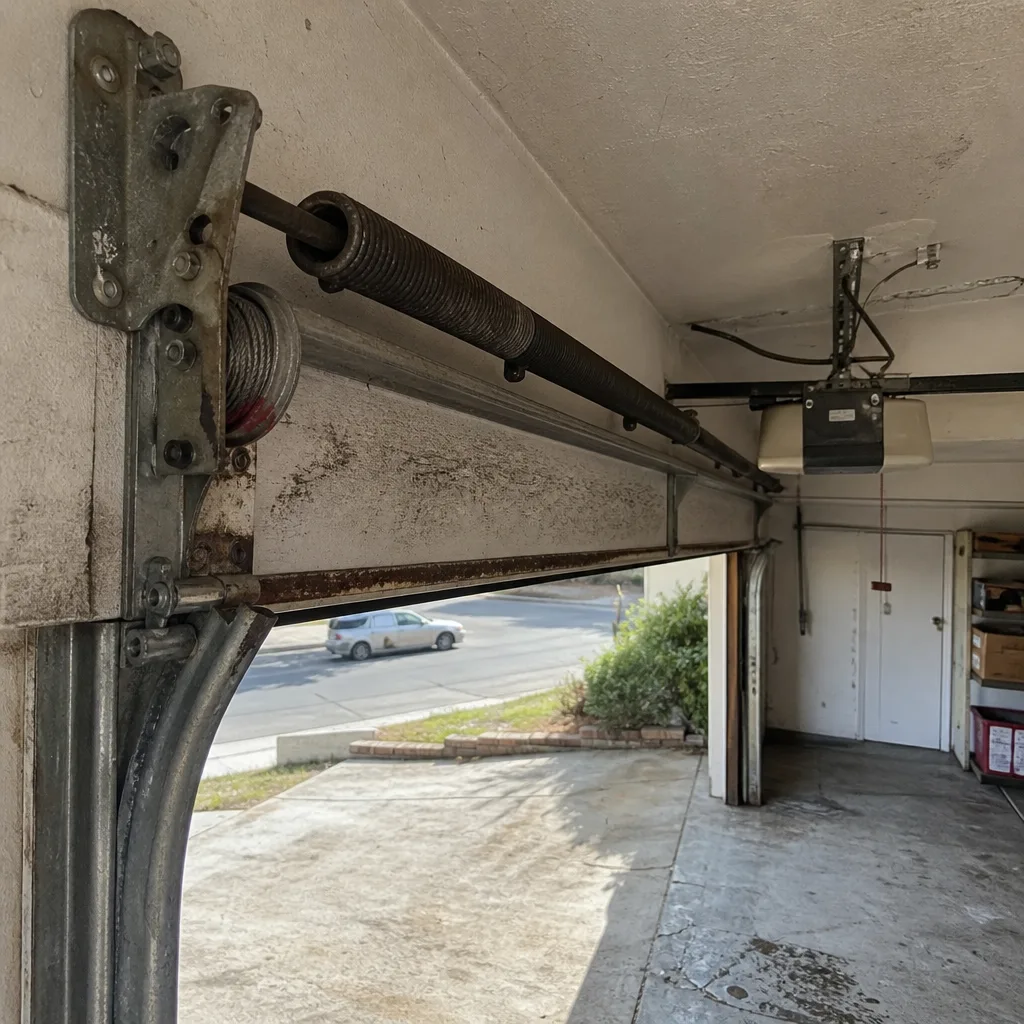 Before
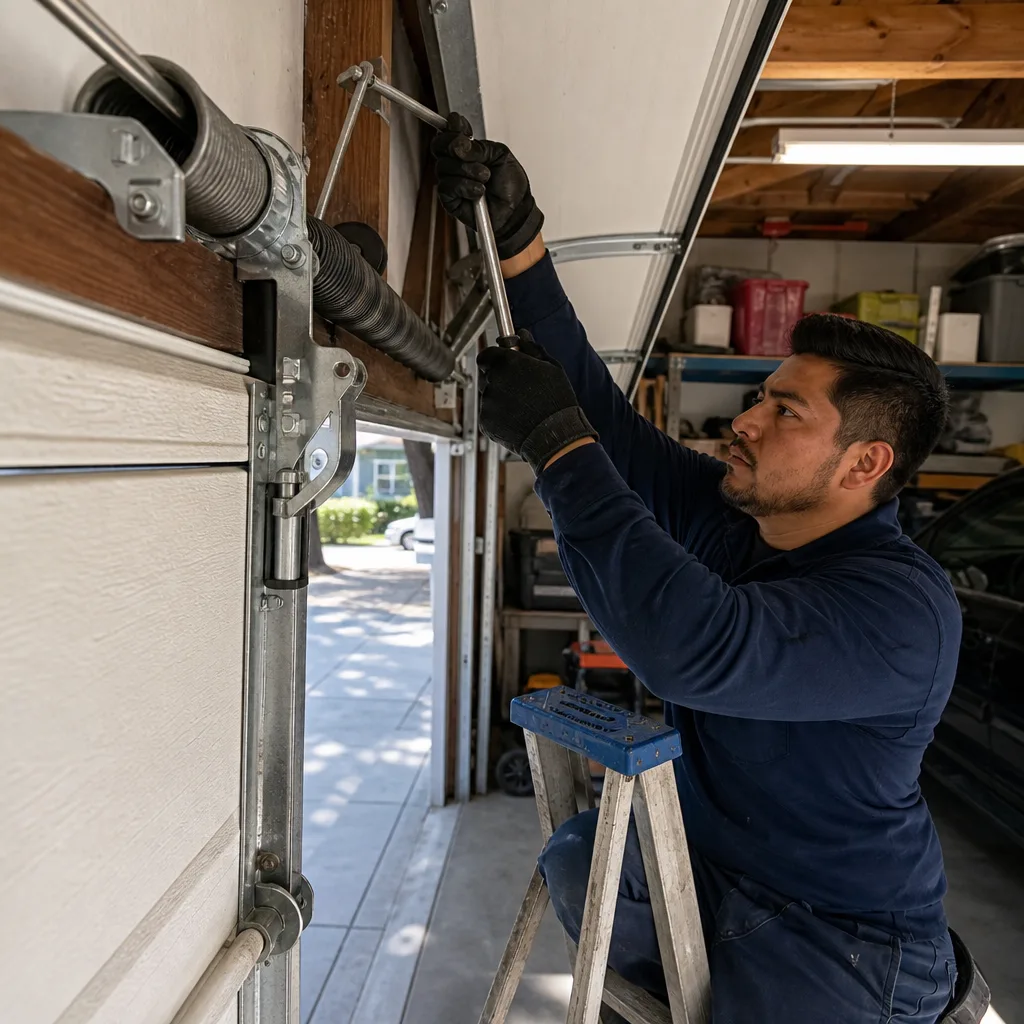 After
After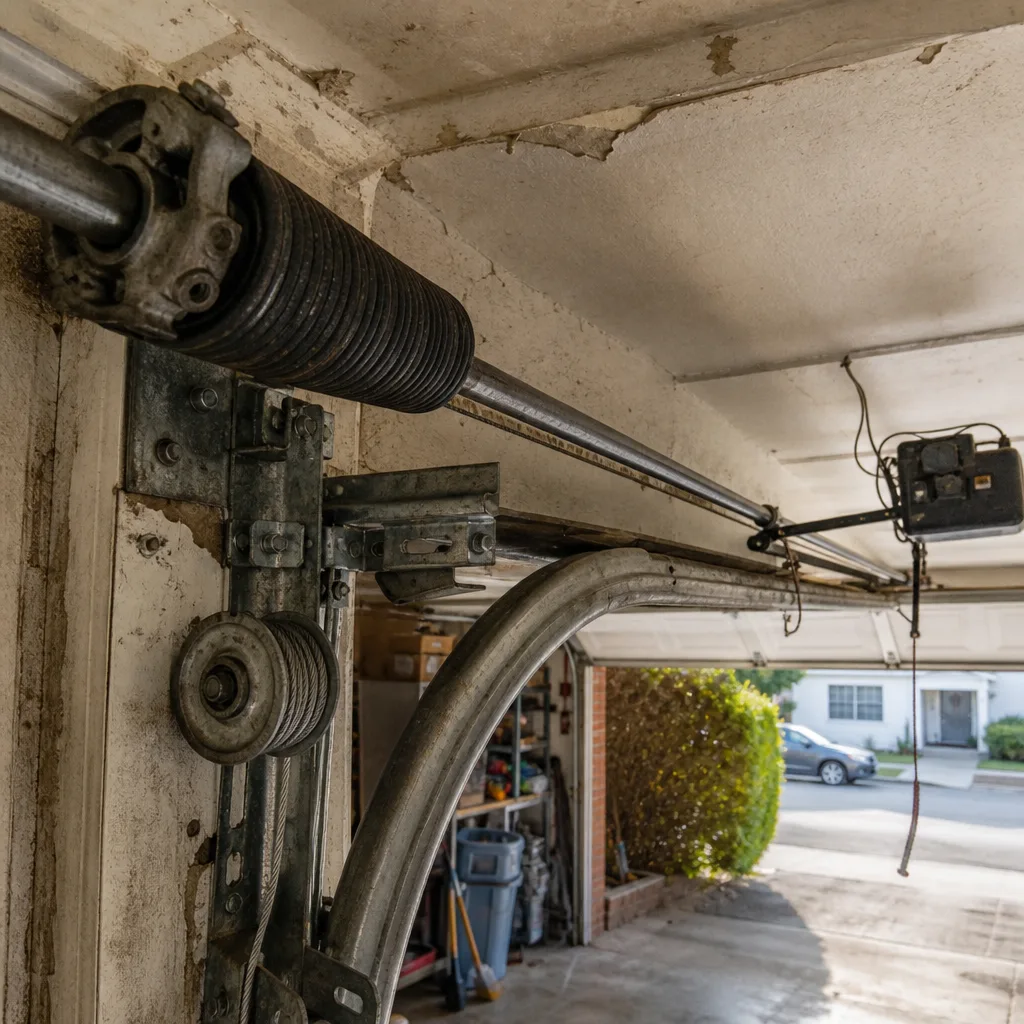 Before
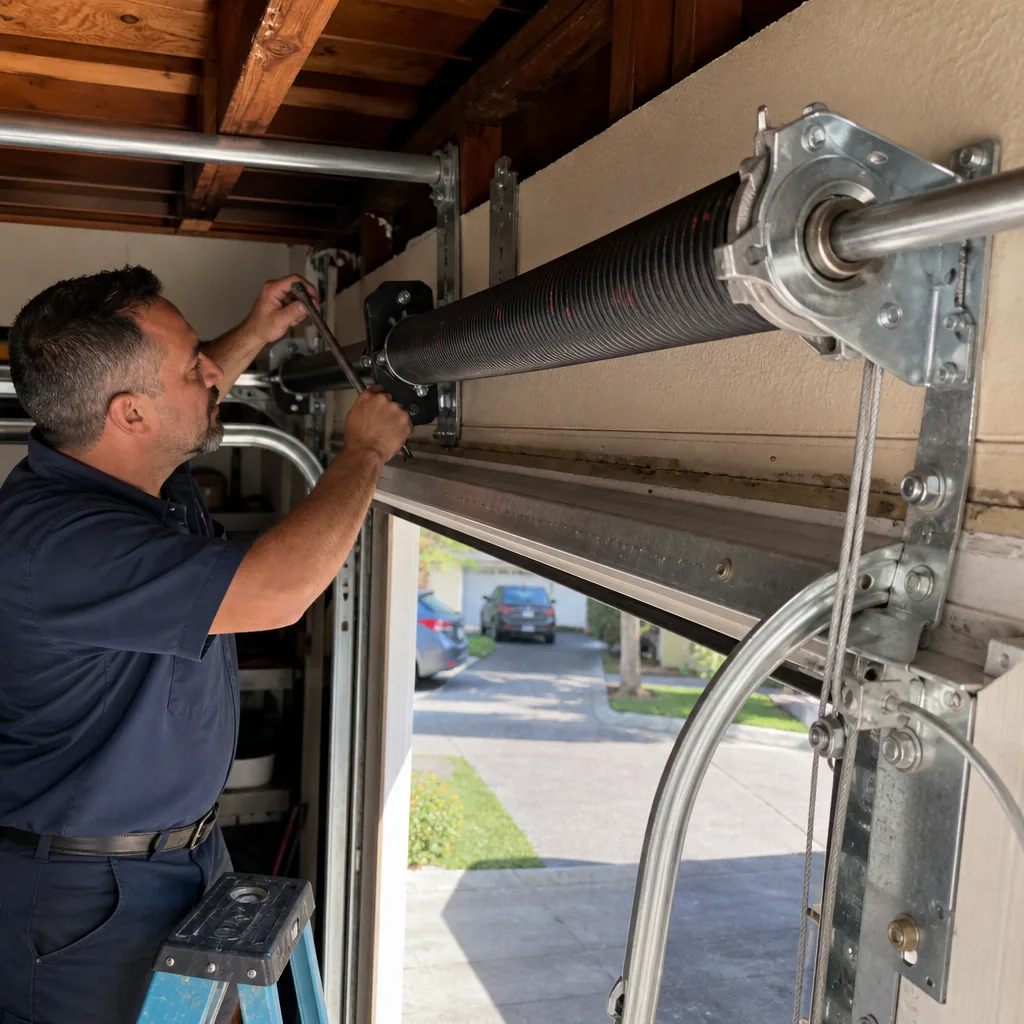 After
AfterSeasonal Garage Door Care for North Hollywood: Year-Round Homeowner’s Guide
The Santa Ana winds that sweep through North Hollywood every October carry more than fire risk. They haul fine desert grit through every gap in your garage door, scoring steel rollers, abrading track surfaces, and working into circuit boards at the exact moment most homeowners are checking smoke detectors, not thinking about their door system. After 42 years of calls across the San Fernando Valley, we’ve learned that North Hollywood doesn’t have four seasons in the traditional sense. It has three mechanical stress events: the summer heat spike, the October Santa Ana cycle, and the January-February wet period. Each one attacks a different part of your door. This guide shows you how to build an inspection calendar around those real local events, not arbitrary monthly reminders, so your door outlasts the house. For The Complete Guide to Garage Door in North Hollywood and more, see our blog.
Quick Answer
Seasonal garage door care in North Hollywood means preparing for three local stress events: pre-summer heat checks on springs and opener electronics (May), pre-Santa Ana track and seal inspection (late September), and post-rain corrosion review (February). A homeowner can handle basic visual checks and lubrication; spring, cable, and opener board work should be left to a trained technician. See our DIY vs Professional Garage Door: The North Hollywood Homeowner’s Decision Guide for details. Most systems that receive this targeted attention last 5-7 years longer than neglected doors in our experience.
Table of Contents
- Summer Heat: What Sustained 95°F+ Days Do to Your Door
- Santa Ana Season: Grit, Wind Load, and the Hidden Wear Window
- Winter Wet Season: Water Infiltration and Frame Rot
- The One 10-Minute Task Per Season That Extends System Life
- Building Your 3-Event North Hollywood Inspection Calendar
- How Local Climate Accelerates Specific Parts
- What You Can Safely Check vs. What Requires a Technician
- What Seasonal Maintenance Costs in North Hollywood
Summer Heat: What Sustained 95°F+ Days Do to Your Door
North Hollywood sits in the San Fernando Valley heat basin, where June through September brings 30-40 days above 95°F and a dozen or more cracking 100°F. That heat doesn’t just make your garage uncomfortable. It changes the metallurgy of your door system in ways that cause sudden, expensive failures.
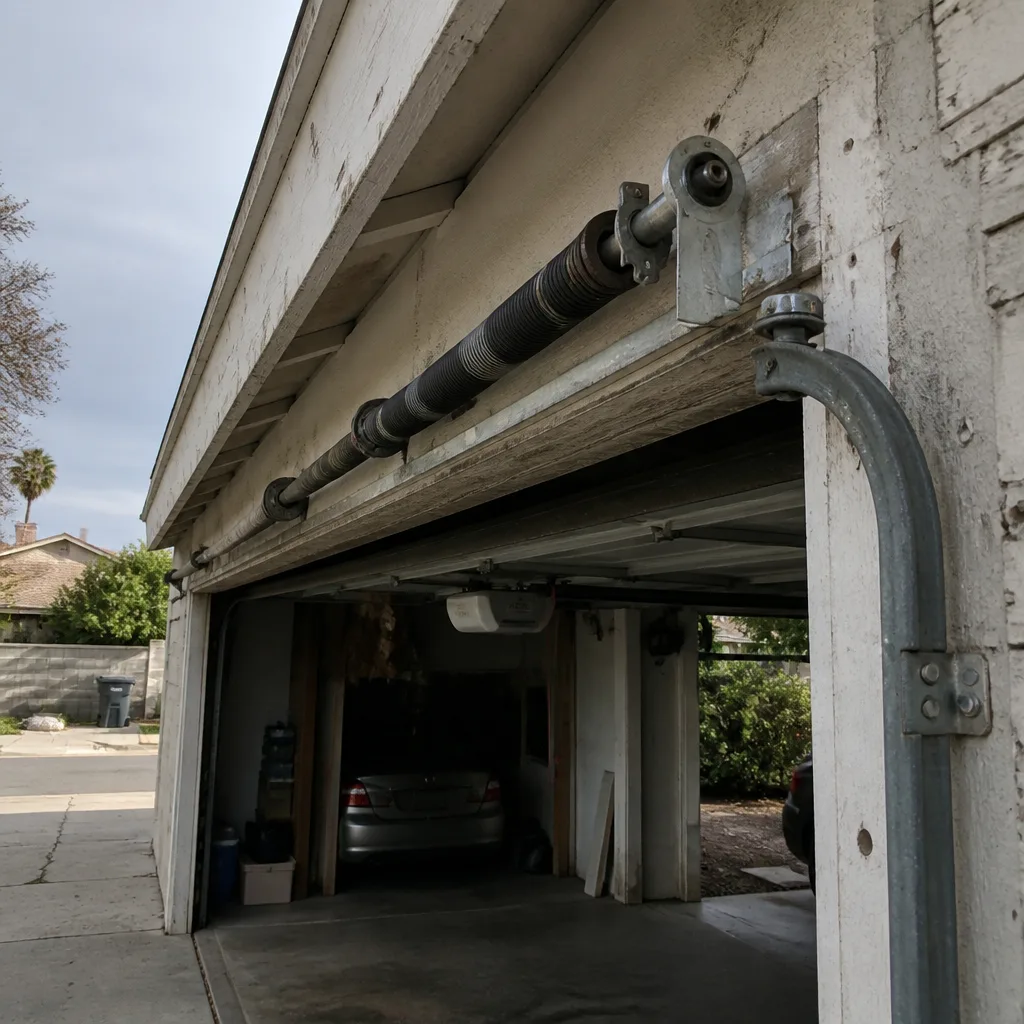
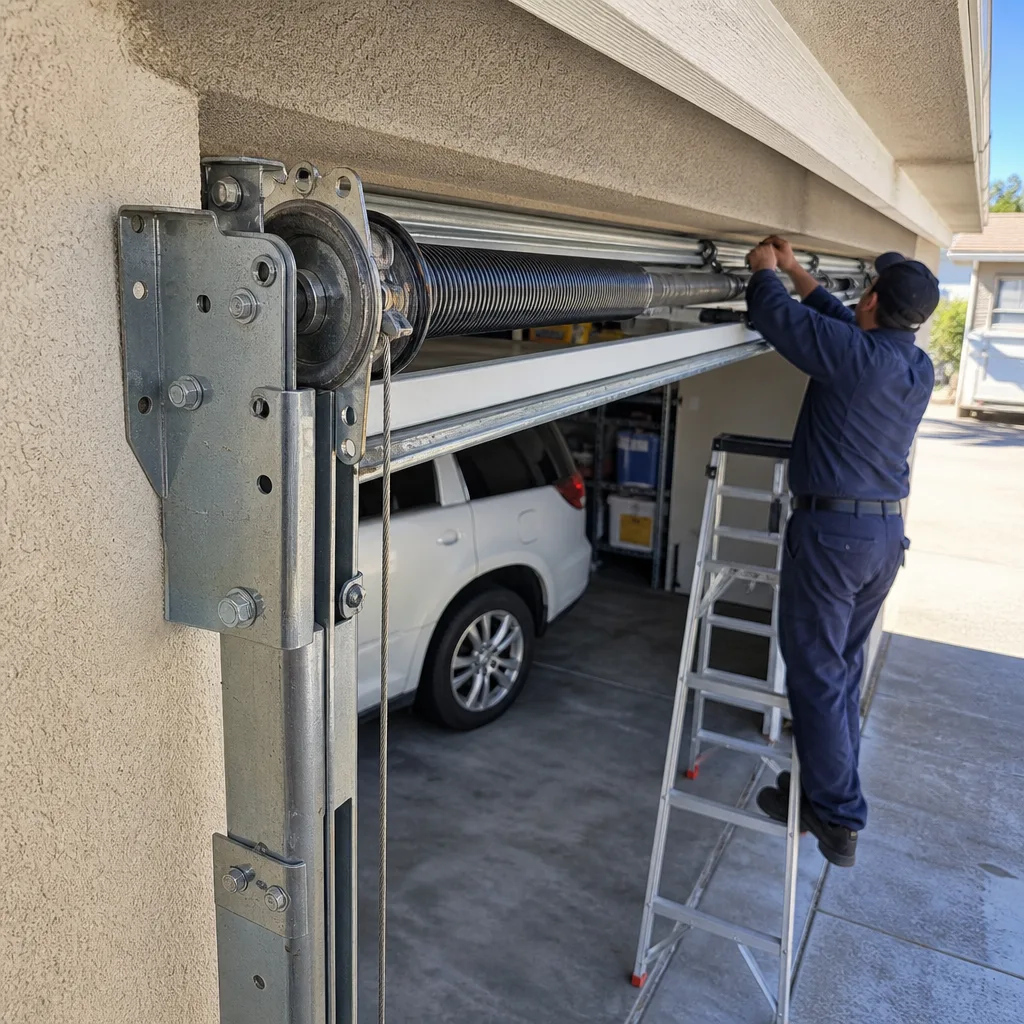
Torsion spring temper loss is the big one. Garage door torsion springs are made of high-carbon steel, heat-treated to a specific hardness that lets them cycle 10,000-15,000 times before metal fatigue sets in. Sustained garage temperatures above 120°F, which we measure routinely in uninsulated North Hollywood garages in July, accelerate that fatigue. The spring doesn’t “melt” or visibly change. It simply loses its temper faster, cycle by cycle, until one morning it snaps during the opening arc. When a torsion spring breaks, the door becomes dead weight, often 150-250 pounds. The opener can’t lift it. The cables may unspool. We’ve replaced springs in Valley Village, Toluca Lake, and the NoHo Arts District that failed at 8,000 cycles because garage heat had aged them like they’d done 12,000.
Opener circuit boards are the second casualty. Modern openers from LiftMaster, Chamberlain, and Genie run logic boards with capacitors and relays rated for ambient temperatures up to about 140°F. In a North Hollywood garage with a west-facing door, afternoon temperatures can push past that. We see more opener “random reverse” calls in August than any other month. The safety sensors work fine. The motor works fine. The logic board is throwing phantom signals because heat-expanded solder joints have developed micro-fractures. A new board runs $180-$340 installed. A pre-summer voltage check and board inspection catches this before it fails.
Panel seams and weatherstripping take the third hit. Steel and aluminum panels expand in heat. The factory sealant in seam joints softens. On older Clopay and Amarr doors common in 1970s North Hollywood tract homes, we’ve seen panels separate at the seams after repeated thermal cycling, letting heat and dust into the garage and compromising the door’s structural integrity.
The pre-summer check that prevents most heat-season failures:
- Test door balance with the opener disconnected. A properly balanced door stays at any height you stop it. If it drifts down, the springs are weakening.
- Feel the opener motor housing after a full open-close cycle. If it’s too hot to touch comfortably for 5 seconds, the motor is working too hard, often because springs are failing.
- Inspect panel seams for lifted sealant or daylight showing through.
- Check the manual release handle. Heat can make plastic handles brittle; a snapped handle in summer means you’re stuck if the opener fails.
We schedule most of these checks in May, before the Valley heat sets in. Our $89 Seasonal Tune-Up includes spring tension testing, opener board voltage check, and panel seam inspection. The 5% senior and veteran discount applies.
Santa Ana Season: Grit, Wind Load, and the Hidden Wear Window
The Santa Ana wind cycle typically arrives in October, though we’ve seen it start in late September and run into November. In North Hollywood, these aren’t just strong winds. They’re hot, dry, and loaded with fine particulate from the Mojave and Colorado deserts. That grit is smaller than beach sand, harder than you’d expect, and it gets everywhere.
Track and roller damage is the primary concern. Garage door tracks have a precise 2-inch or 3-inch width tolerance, depending on door size. Rollers ride on that tolerance with about 1/16-inch clearance. When Santa Ana winds blow grit against the door, particles work into that gap. The steel rollers, which are case-hardened but not through-hardened, develop scoring marks. Once a roller is scored, it doesn’t roll smoothly. It chatters. That vibration transfers to the hinges, then to the panels, then to the opener. We’ve replaced entire roller sets in North Hollywood homes where the original failure was a single grit-scored roller that the homeowner ignored for two seasons.
Weatherseal inspection timing matters here. The bottom seal on your garage door is a rubber or vinyl bulb that compresses against the concrete threshold. Santa Ana winds test it two ways: direct wind pressure tries to peel it loose, and flying grit abrades the contact surface. If the seal is already cracked or compressed flat, this is when it fails completely. That’s a problem because the January-February rains follow immediately after. A failed bottom seal in October means water infiltration in January.
Wind load on the door itself is often underestimated. A standard 16-foot wide by 7-foot tall garage door presents 112 square feet of surface area. Santa Ana gusts of 50-60 mph, common in the Valley, create pressure loads that stress the horizontal reinforcement struts, the hinge screws, and the track mounting brackets. On older Wayne Dalton and Raynor doors with thinner-gauge steel, we’ve seen hinge screws wallow out their holes after repeated wind events, causing the door to rack and bind.
The late-September inspection checklist:
- Run the door and listen for new rattling or chattering from rollers
- Visually inspect track interior for scoring marks or grit accumulation
- Check bottom seal for cracks, flat spots, or looseness at the ends
- Wiggle each hinge to test screw tightness; look for elongated screw holes
- Inspect track mounting brackets for wall anchor movement
- Test the auto-reverse with a 2×4 on the threshold; grit in the track can throw off travel limits
This is also the ideal window for our Garage Door Repair in North Hollywood team to replace worn rollers with sealed-bearing nylon rollers that resist grit infiltration, or to upgrade a failing bottom seal to a wider, more compressible bulb that handles both wind and rain. Most of these jobs finish in a single visit with parts from the truck.
Winter Wet Season: Water Infiltration and Frame Rot
North Hollywood’s “winter” is mild by national standards, but January and February bring 3-5 inches of rain concentrated in brief, heavy storms. The water itself isn’t the main threat. It’s what happens when water finds the path your door system created in the dry months.
Track rust starts at the bottom. Steel tracks are galvanized, but the cut ends at the floor bracket aren’t. Water that gets past a compromised bottom seal pools at the track base. We’ve removed track sections in North Hollywood garages where the lower 6 inches had rusted to paper-thin metal, usually on the street-facing door where runoff from the driveway flows toward the garage. The door still operates, but the rusted section is a stress concentrator. One hard close, one winter wind gust, and the track kinks or splits.
Wood frame rot is a hidden problem on pre-1990 homes. Many North Hollywood houses built in the 1950s-1970s have wood jambs and headers framing the garage door opening. The wood was often Douglas fir or pine, not pressure-treated. When water gets past a failed seal or flashing, it wicks into the end grain at the bottom of the jamb. By the time you see staining on the interior drywall, the wood behind is punky and structural integrity is compromised. We’ve done installations where we had to replace the entire door frame before the new door could be hung safely. That turns a $1,200 door replacement into a $3,400 project.
Opener safety sensor misalignment follows freeze-thaw cycles. North Hollywood doesn’t freeze often, but we get enough 35°F mornings to create minor ground heave on older concrete. That heave shifts the sensor brackets by fractions of an inch. The sensors, which need alignment within about 1/8-inch to communicate, start throwing random obstruction errors. The door reverses for no visible reason. Homeowners blame the opener; usually it’s the ground moving under the brackets.
Post-rain inspection in February:
- Look for rust staining on the concrete at track bases; that’s water evidence even if the surface looks dry
- Probe wood jambs with a screwdriver at the bottom 12 inches; soft wood means rot
- Check the gap between door bottom and threshold after a rain; any water line on the interior means seal failure
- Verify sensor alignment with the LED indicators; both should glow steady, not flicker
- Operate the door after rain; listen for grinding that might indicate rust particulate in rollers
Our Garage Door Installation in North Hollywood includes frame inspection on every quote. If we find rot, we quote it separately, upfront, before any work starts. No surprises on the bill.
The One 10-Minute Task Per Season That Extends System Life
Most homeowners won’t do a 20-point inspection. Fair enough. But one focused task per season, done consistently, prevents the majority of premature failures we see in North Hollywood.
Pre-Summer (May): The Balance Test
Disconnect the opener by pulling the red release handle. Lift the door manually to waist height and let go. A properly balanced door stays put. If it falls, the springs are losing tension and overworking the opener motor. If it rises, the springs are too tight and stressing the cables and drums. Either condition means a spring service call before summer heat makes it worse. This test takes 2 minutes and requires no tools. Do it twice: once in early May, once in late August, to catch temper loss mid-season.
Pre-Santa Ana (Late September): The Seal Compression Check
Close the door at night, turn off the garage lights, and look for daylight under the bottom seal. Any visible line means the seal isn’t compressing fully. Mark the spots with tape. Then run your hand along the seal feeling for cracks, flat spots, or hardened sections. A good seal is supple and uniform. This 5-minute check, done before the winds arrive, prevents the grit infiltration and water damage that drive our October-March repair calls.
Post-Rain (February): The Track Base Wipe
Take a clean white rag and wipe the bottom 6 inches of each vertical track. If the rag comes up orange or brown, you have rust forming even if the track looks fine to the eye. Apply a thin film of white lithium grease to the wiped area; this displaces moisture and prevents further oxidation. Check the floor bracket screws for looseness while you’re down there. This 10-minute task catches track rust before it becomes a structural failure.
These three tasks, 27 minutes total per year, are the difference between a door that lasts 25 years and one that needs major work at 15. We’ve seen it repeatedly in North Hollywood neighborhoods where homeowners who bought in the 1980s are still on their original door system.
Building Your 3-Event North Hollywood Inspection Calendar
Monthly reminders don’t match how North Hollywood weather actually works. A door inspected in March sits untouched through the critical May-August heat period. A September reminder comes too late for Santa Ana prep. Build your calendar around the three stress events instead.
| Event Window | Timing | Your Action | Professional Task |
|---|---|---|---|
| Pre-Summer Heat | Second week of May | Balance test, visual panel/seal check | $89 Seasonal Tune-Up: spring tension, opener board, motor load test |
| Pre-Santa Ana Winds | Last week of September | Seal compression check, track grit wipe, hinge wiggle test | Roller replacement if scored, seal upgrade, track bracket torque check |
| Post-Winter Rain | Third week of February | Track base rust check, sensor alignment verify, wood jamb probe | Track section replacement if rusted, frame repair if rot found, sensor bracket re-secure |
Set phone reminders for these three windows, not for arbitrary monthly dates. The May reminder should trigger before the first 100°F day, which in North Hollywood often comes by late May. The September reminder should beat the first Santa Ana event, which can arrive in early October. The February reminder follows the last major storm, typically Presidents Day weekend.
For homeowners who prefer not to handle any of this themselves, our Mainspring Garage Door Co. home page has a direct booking option, or you can call and speak to a live person 24/7. We keep the $89 Seasonal Tune-Up available year-round, though scheduling it in the recommended window prevents the emergency call that costs more and interrupts your day.
How Local Climate Accelerates Specific Parts
Not all garage door parts age at the same rate in North Hollywood’s specific climate. Understanding which parts fail first helps you prioritize spending and catch problems early.
Torsion springs: 8-12 years typical, 5-7 in uninsulated west-facing garages
The heat factor is dominant. A spring in a garage that hits 130°F in August ages roughly 1.5x faster than one in a shaded, insulated space. We see the shortest spring life in the hillside homes above Magnolia Boulevard, where afternoon sun and poor garage ventilation combine. The longest-lived springs are in older Toluca Lake homes with detached garages shaded by mature trees.
Rollers: 10-15 years for sealed nylon, 5-8 for unsealed steel
Santa Ana grit is the killer. Unsealed steel rollers without ball bearing seals let grit into the race. Once contaminated, they grind themselves flat. Sealed-bearing nylon rollers, which we stock on every truck, exclude grit and run quieter. The upgrade cost is typically $12-$18 per roller installed; on a 16-foot door with 10-12 rollers, that’s $140-$200 that prevents $400-$600 in track and hinge damage later.
Bottom seal: 3-5 years, shorter if sun-exposed
UV degradation is faster on south and west-facing doors. The vinyl becomes brittle, then cracks, then fails. In NoHo Arts District lofts with street-facing garage doors at sidewalk level, we’ve seen seals fail in 18 months from UV plus foot traffic abrasion. A wider EPDM rubber seal, which we carry for these applications, lasts 7-10 years.
Opener logic boards: 10-15 years in moderate climates, 6-10 in hot garages
Heat is the variable. Chamberlain and LiftMaster boards from the 2010s have better thermal tolerance than 1990s Genie boards, but all suffer in unventilated spaces. If your garage has no vents, no windows, and a dark roof, budget for board replacement at year 8 regardless of apparent function.
Cables and drums: 15-20 years unless damaged
These are actually the most durable parts in North Hollywood conditions. Cable failures we see are almost always secondary: a spring breaks, the door drops unevenly, and the cable unspools or frays against the track. Maintain the springs and the cables outlast the door.
What You Can Safely Check vs. What Requires a Technician
We’re straightforward about this because we’ve seen the results when homeowners guess wrong. Some garage door work is genuinely dangerous. Some is simple observation. Here’s the line.
Safe for any homeowner:
- Visual inspection of panels, seals, and hardware from a standing position
- Balance test with opener disconnected
- Photo-eye sensor cleaning and alignment check
- Lubrication of hinges, rollers, and track with white lithium grease or silicone spray
- Listening for new noises during operation
- Checking the manual release handle function
Requires a trained technician:
- Any work on torsion springs, including tension adjustment or replacement. These are under extreme torque and can cause serious injury or death if handled improperly.
- Cable replacement or drum adjustment. Cables are under spring-loaded tension and can whip unpredictably.
- Track realignment or section replacement. Improperly supported doors can fall.
- Opener electrical work beyond plug replacement. Capacitors hold charge even when unplugged.
- Spring winding bar procedures. No exceptions. Online tutorials do not convey the feel for safe winding.
Our technicians are trained as journeymen under our K.E.Y.S. values code: Krafted right, Every time, Your home first, Standing behind it. They’re background-checked, uniformed, and arrive with parts for most single-visit completions. The 90-Day Done Right Promise covers every job in writing.
What Seasonal Maintenance Costs in North Hollywood
We quote flat prices before any work begins. Here are the typical ranges for seasonal maintenance and common preventive repairs in the North Hollywood market; for deeper cost context, see our Garage Door Cost Breakdown: The North Hollywood Homeowner’s Reference for 2026:
| Service | Typical Range | What’s Included |
|---|---|---|
| Seasonal Tune-Up | $89 (standing offer) | Spring tension test, balance verification, opener board voltage check, safety sensor test, 21-point hardware inspection, lubrication |
| Roller replacement (full set, sealed nylon) | $140-$220 | 10-12 rollers, labor, disposal, track cleaning |
| Bottom seal replacement | $85-$160 | Seal material, retainer channel if needed, labor |
| Spring replacement (pair, standard torsion) | $280-$420 | Two springs, winding bars, cables if worn, labor, 90-Day Promise |
| Opener logic board replacement | $180-$340 | Board, programming, safety test, labor |
| Track section replacement (rust damage) | $220-$380 | Track section, hardware, alignment, labor |
These are quoted ranges, not estimates that change. When our technician arrives, they diagnose, state the flat price, and get your approval before starting. The $50 Off Any Repair Over $250 applies to work beyond the tune-up. Seniors and veterans receive an additional 5% on all services. If you have a written estimate from another company, we’ll provide a Free Second Opinion.
Our Garage Door Opener in North Hollywood service covers all major brands, including troubleshooting for heat-related board failures that are common in Valley garages.
Common Mistakes to Avoid
- Using WD-40 on garage door parts. WD-40 is a solvent and water displacer, not a lubricant. It strips existing grease and attracts dust. In North Hollywood’s gritty environment, this accelerates wear. Use white lithium grease or silicone spray instead.
- Ignoring a slow-opening door. A door that takes 15 seconds to open instead of 10 is not “just getting old.” The opener is compensating for spring fatigue. Run it this way through a hot summer and you’ll need both springs and an opener motor.
- Waiting for the spring to break. A broken torsion spring often damages cables, bends drums, and in worst cases, lets the door fall. The grinding sound before the snap was your warning. In North Hollywood’s heat, that warning window is shorter than in cooler climates.
- Power-washing the door and track. The pressure forces water into bearings, roller races, and between panel seams. In a climate where rust starts within days of moisture exposure, this causes the problems you’re trying to prevent.
- Skipping the September inspection because “it never rains here.” The Santa Anas are the threat in that window, not rain. Grit infiltration during October winds is what destroys rollers and sets up winter water damage.
- Buying a DIY spring kit online. Torsion spring replacement requires winding bars, knowledge of door weight calculation, and respect for stored energy. We’ve been called to North Hollywood homes where a homeowner’s improvised tool slipped, damaging the door, the garage interior, and in one case, requiring emergency medical attention.
- Assuming all technicians are equally trained. California does not license garage door technicians specifically. Ask about company training programs, background checks, and written warranties before you hire. Our K.E.Y.S. journeyman program requires 18 months of supervised field work before solo calls.
When to Call a Professional
Call when you notice any of these: a loud bang from the garage (likely spring failure), the door hanging crooked, cables off the drums, the opener motor running but door not moving, grinding or screeching that lubrication doesn’t fix, or any visible rust on track sections. These are not “watch and wait” conditions. A failed spring or cable can make a 200-pound door unpredictable and dangerous.
Carl Dutton and the team at Mainspring Garage Door Co. offer free estimates in North Hollywood. A technician arrives, assesses, states the flat price, and lets you decide. No pressure, no upsell, no surprises on the bill. Most preventive maintenance and common repairs are completed in a single visit with parts from the truck. Call (747) 239-5578 anytime; a live person answers, including nights, weekends, and holidays.
Frequently Asked Questions
Once per year is sufficient for most North Hollywood homes, timed to the pre-summer or pre-Santa Ana window. Doors in uninsulated, west-facing garages, or those with heavy daily use (4+ cycles), benefit from twice-yearly service. Our $89 Seasonal Tune-Up covers the key inspection points for annual maintenance. Call (747) 239-5578 to schedule, or browse more guides & resources on our blog.
Homeowners can safely lubricate hinges, roller bearings, and the chain or screw drive with white lithium grease or manufacturer-recommended silicone spray. Do not lubricate the track surface itself; this attracts grit and causes roller slip. Torsion springs, cables, and opener internal gears should be left to a technician. We include proper lubrication in every tune-up.
Spring life depends on cycle count, garage temperature, and spring quality. If your garage faces west, lacks ventilation, or has a dark roof, summer heat likely accelerates your springs’ metal fatigue. If your door is heavier (insulated, double-car, or wood-grain overlay), the springs work harder per cycle. We measure and spec springs to the exact door weight; undersized springs from a previous installer fail prematurely.
Belt-drive openers from LiftMaster or Chamberlain with battery backup and thermal-protected logic boards handle Valley heat best. The belt drive runs cooler and quieter than chain drive. Battery backup is required by California law for new installations. We stock and install heat-rated models and can retrofit thermal shields for existing openers in extreme garage environments.
Close the door on a bright day and look for daylight lines underneath. Slide a sheet of paper under the seal; if it moves freely, the seal isn’t compressing. Check the seal’s flexibility by pinching it; cracked or hardened vinyl won’t spring back. In North Hollywood, UV exposure on south and west-facing doors causes premature seal hardening. We check seal condition on every service call and carry replacements on the truck.
Yes. Our phones are staffed by a live person 24/7, including holidays. We carry springs, cables, openers, and hardware for most major brands on every truck, so most emergency repairs are completed in a single visit. The 90-Day Done Right Promise applies to emergency work too, in writing, with no dispute process. Call (747) 239-5578 anytime.
The Bottom Line
North Hollywood’s garage doors face three distinct stress events, not four gentle seasons. Summer heat attacks springs and electronics. October Santa Anas drive grit into every moving surface. January rains exploit the wear those first two events created. A homeowner who builds their maintenance around these real local patterns, with three brief inspections per year, prevents the majority of premature failures we’ve documented across 42 years in the Valley. The 10-minute seasonal tasks, combined with professional tune-ups at the right windows, extend system life by measurable years. For everything beyond safe homeowner checks, Mainspring Garage Door Co. provides flat-price, single-visit service backed by our 90-Day Done Right Promise. The work gets done right, or we come back and make it right. No paperwork, no arguing, in writing on every job.
Written by Carl Dutton, Owner at Mainspring Garage Door Co., serving North Hollywood since 2016.