
Last updated September 10, 2026
Full 25-point door and opener safety check with every visit - springs, cables, rollers, tracks, and your LiftMaster or Chamberlain opener included
You get a price before we start. It does not change when the truck arrives.
 Before
 After
After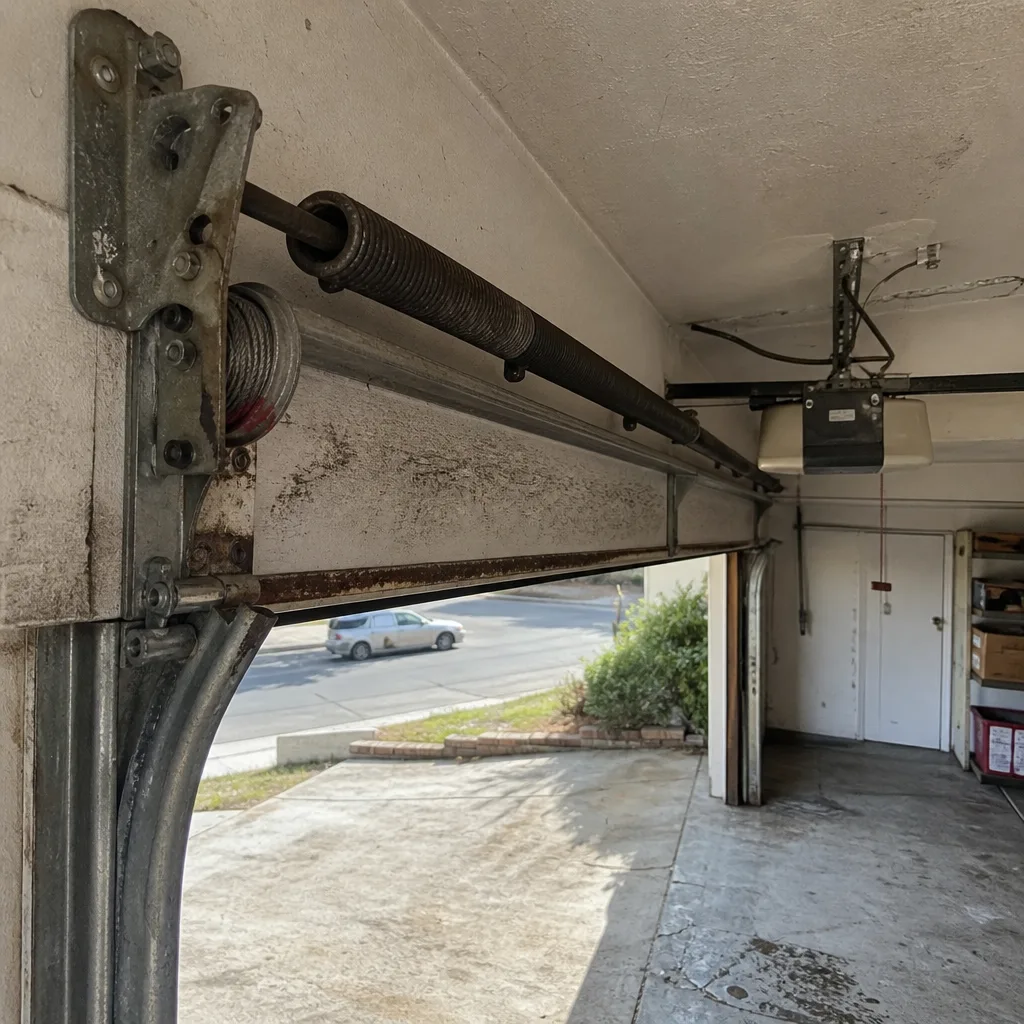 Before
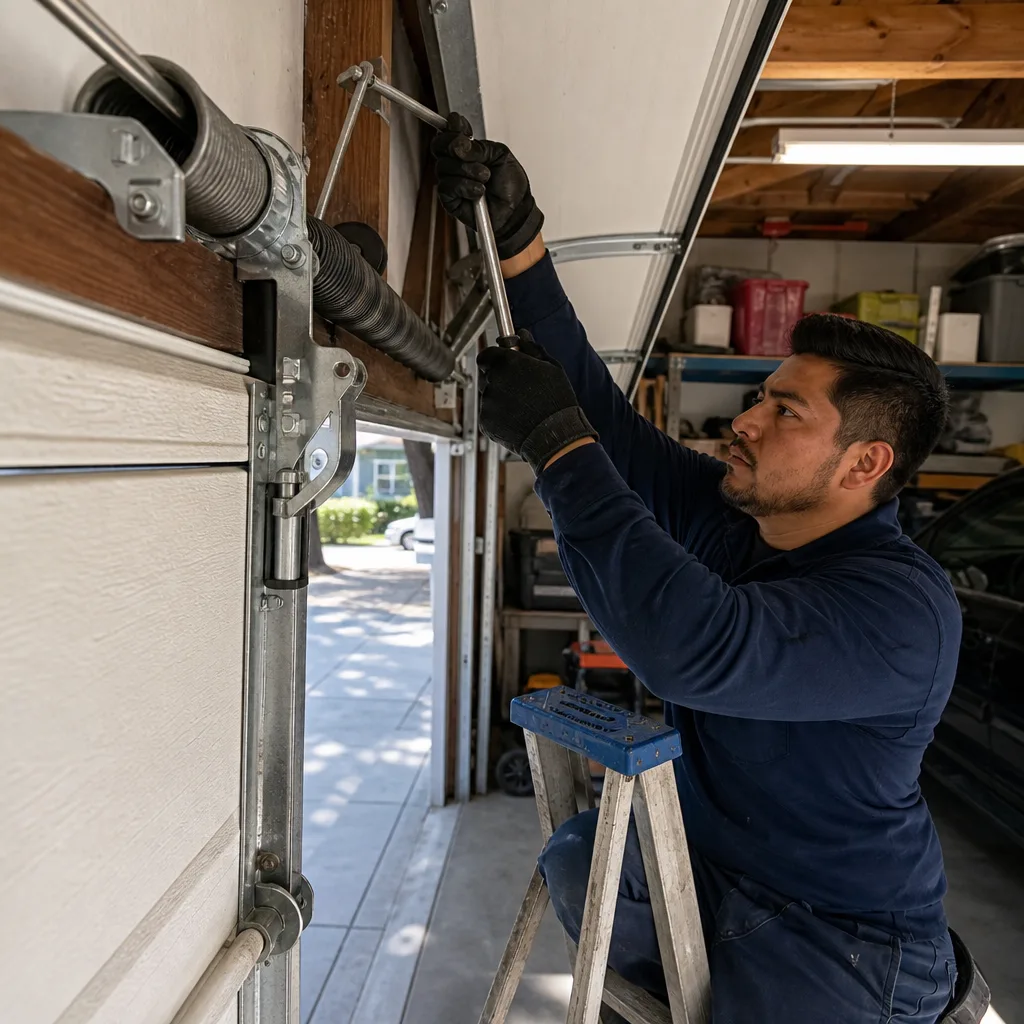 After
After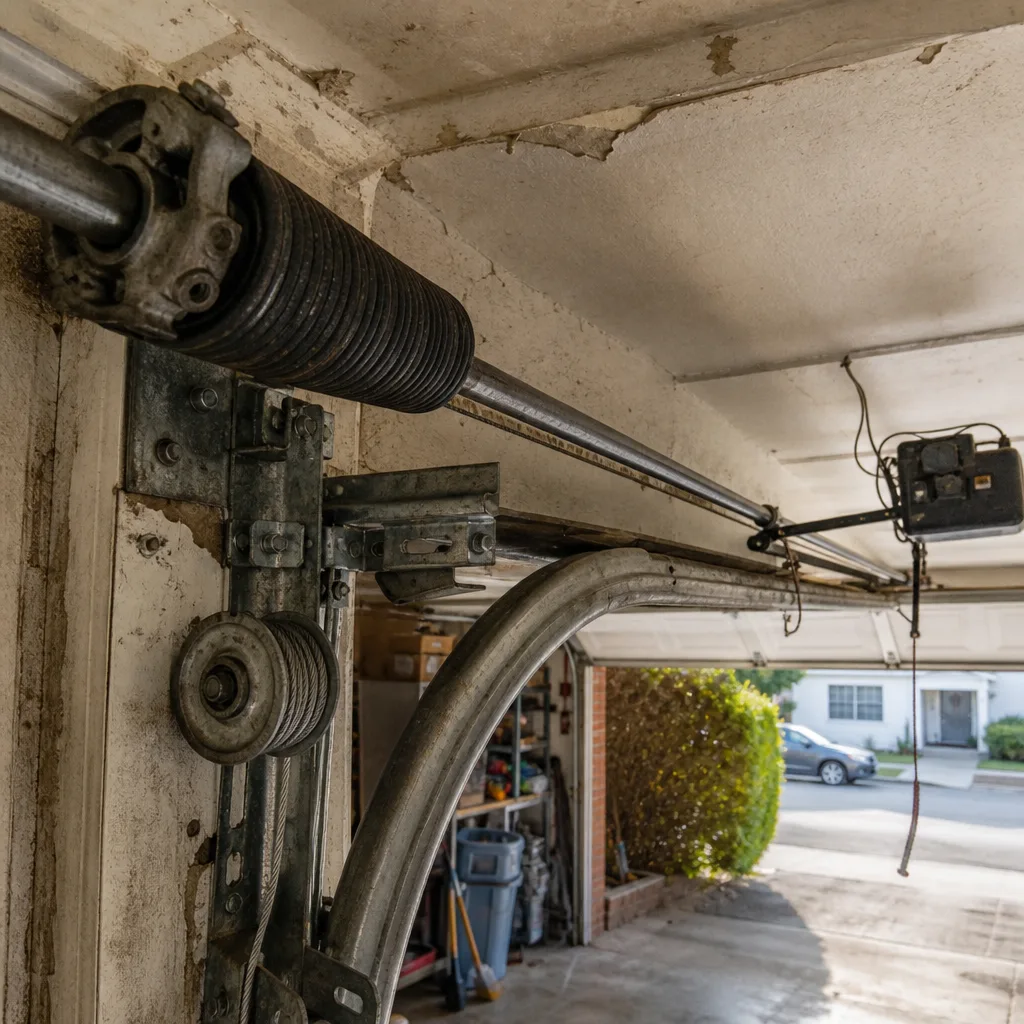 Before
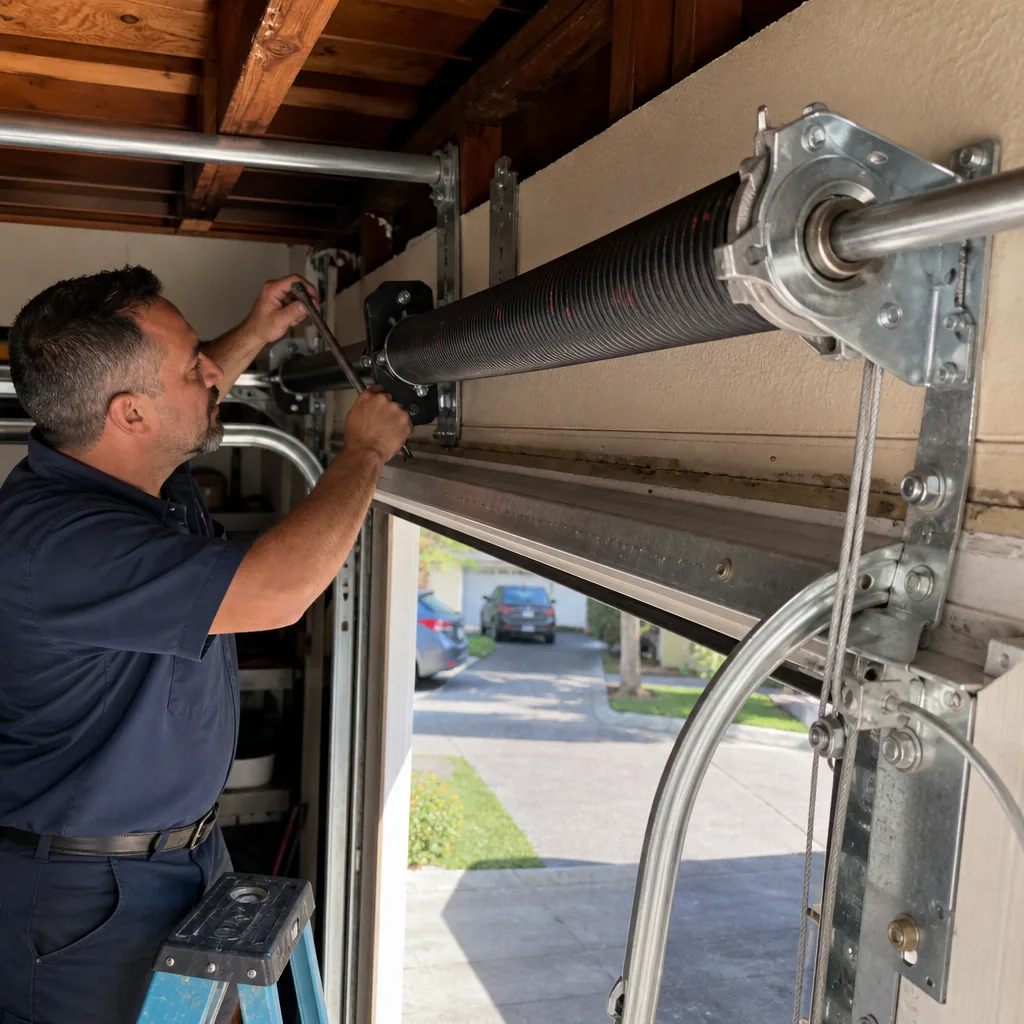 After
AfterDIY vs Professional Garage Door: The North Hollywood Homeowner’s Decision Guide
A standard torsion spring on a two-car garage stores roughly the same energy as a drawn crossbow - except it’s wound 30 turns and attached to a steel shaft six feet above your head. That’s not a reason to panic. It is a reason to be precise about which tasks are genuinely DIY and which ones only look like it. In North Hollywood, where many homes were built between the 1940s and 1970s with non-standard opening heights and track configurations that don’t match modern tutorials, that precision matters more than most homeowners realize. This guide will show you exactly where the line falls, how to test your own door safely, and what a flat-rate professional repair actually costs compared to doing it yourself - including the price of getting it wrong. For a detailed look at pricing, see our Garage Door Cost Breakdown: The North Hollywood Homeowner’s Reference for 2026.
Quick Answer
Most North Hollywood homeowners can safely handle lubrication, weatherseal replacement, photo-eye alignment, and basic opener programming. Any work involving springs, cables, or track realignment should be done by a trained technician. The real decision factor is not cost - it’s whether you are comfortable working around components storing 200+ foot-pounds of tension that cannot be safely released with standard household tools.
Table of Contents
- Understanding Torque: Why Garage Doors Are Different From Other Home Repairs
- The Safe DIY Task List: What You Can Actually Handle
- The Never-DIY List: Springs, Cables, and Track Work
- The Balance Test: The One Diagnostic Every Homeowner Should Do
- The True Cost Comparison: DIY Parts vs. Professional Flat Rate
- The YouTube Gap: What Tutorials Don’t Show You
- North Hollywood-Specific Factors: Older Homes, Custom Builds, and Local Codes
- Choosing a Professional: What to Ask Before You Hire
Understanding Torque: Why Garage Doors Are Different From Other Home Repairs
Most home repairs involve gravity pulling things down. You can predict that. You can brace for it. A garage door torsion spring does something else entirely - it stores rotational energy in a tightly wound coil of hardened steel, and that energy wants to unwind violently if anything releases it unexpectedly.
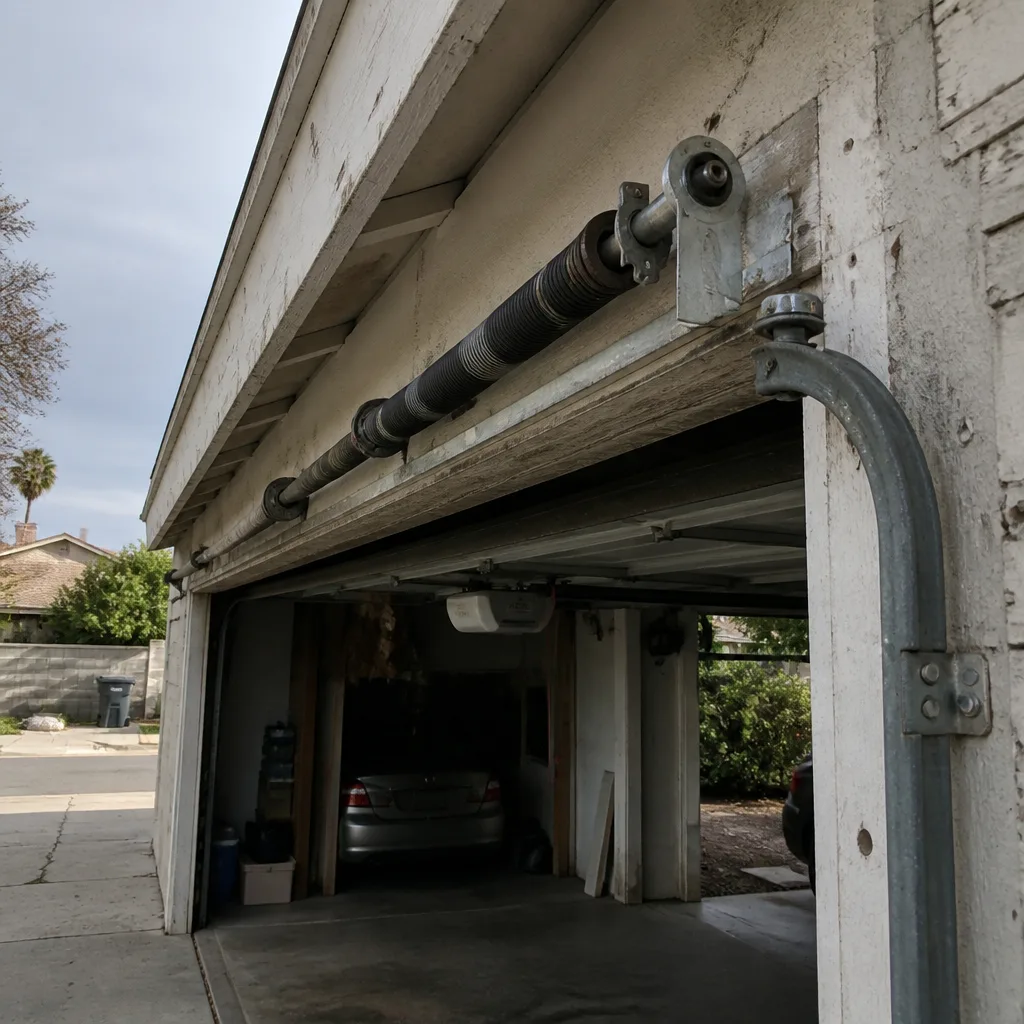
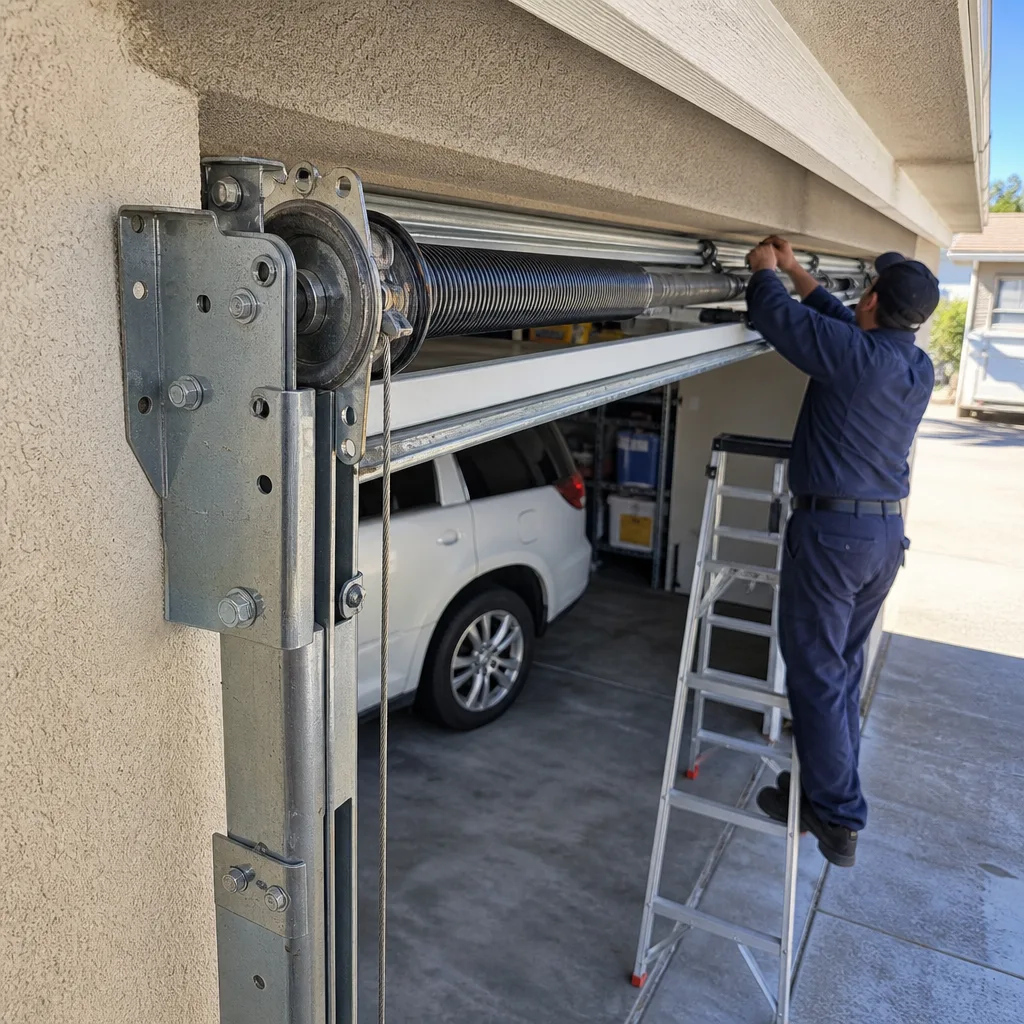
Here’s the physics in plain terms. A standard 2-inch torsion spring on a 16-foot wide door in North Hollywood typically carries a wire size between 0.225 and 0.250 inches, wound to between 7.5 and 8.5 turns. Each turn stores approximately 25 to 35 foot-pounds of torque. Do the math: you’re standing near a shaft carrying 200 to 300 foot-pounds of stored energy, held in place by nothing more than set screws tightened against smooth steel. Those set screws can back out. Winding bars can slip. A cable can snap mid-repair. When any of these happen, the energy releases in a quarter-second.
We’ve seen the aftermath. In our 42 years serving the San Fernando Valley, including North Hollywood and surrounding communities, the injuries that require hospitalization are almost never from the door falling. They’re from the spring unwinding, the winding bar striking the face or hand, or the homeowner losing balance on a ladder while reacting to unexpected movement. The danger is not the weight of the door. It’s the speed of the release.
This is why we frame the DIY question around torque, not cost. A homeowner can safely replace a faucet, patch drywall, or even swap out an electrical outlet with basic precautions. None of those involve stored mechanical energy that exceeds the torque spec of most automotive impact wrenches. A garage door spring does.
The components that carry this torque are:
- Torsion springs: The primary lift mechanism on most modern doors. Wound tight, they do the actual work of raising 150 to 400 pounds of door.
- Extension springs: Found on older or lighter doors, stretched along the horizontal track. When they break, they can whip across the garage with enough force to dent a car door or break bone.
- Cables: Transfer spring torque to the bottom brackets. Frayed cables snap under load, and the sudden release can throw a homeowner off a ladder.
- Bottom brackets: The anchor point where cable tension meets the door. These are under constant load and require specialized tools to safely release.
If your repair involves any of these four components, you are not doing maintenance. You are disarming a mechanical system under load. That requires training, the right tools, and an understanding of what can go wrong before it does.
The Safe DIY Task List: What You Can Actually Handle
Not everything on a garage door requires a journeyman. There is real maintenance work that saves you money, extends door life, and carries no meaningful injury risk if done with basic care. We encourage homeowners to handle these tasks themselves. A well-maintained door needs fewer repairs, and we’d rather see you every two years for a tune-up than every six months for a breakdown. For a complete schedule, see our Garage Door Repair Maintenance Checklist for North Hollywood Homeowners.
Lubrication (Every 6 Months)
North Hollywood’s dry summers and occasional Santa Ana wind cycles accelerate wear on metal-to-metal contact points. A homeowner can safely lubricate the hinges, rollers, and bearing plates with a silicone-based spray. Do not use WD-40 as a lubricant - it is a solvent that strips protective oils. Do not lubricate the track itself; clean it with a damp cloth instead. The track is a guide, not a bearing surface, and lubricant there collects dust and grit.
- Disconnect the opener by pulling the red release cord.
- Manually lift the door to waist height and let it rest.
- Apply silicone spray to each hinge pivot point, roller stem, and the bearing plate at each end of the torsion shaft.
- Wipe excess with a rag. A thin film is enough; drips attract dirt.
- Reconnect the opener and test.
Time required: 15 minutes. Cost: $8 to $12 for a can of quality spray. Frequency: Every six months, or after any period of heavy use.
Weatherseal Replacement
The rubber seal at the bottom of your door hardens and cracks in North Hollywood’s sun exposure, typically within 3 to 5 years. Replacement requires no tools beyond a utility knife and possibly a helper to hold the door at waist height while you slide the new seal into the retainer channel.
Measure the width of your door and buy seal by the foot at any hardware supplier. Most North Hollywood homes with single-car garages need 9 feet; two-car doors need 16 to 18 feet. The seal slides into a T-shaped channel at the bottom of the door. If your door lacks this channel - common on pre-1980 doors in the Valley - you’ll need a retainer kit, and that installation does require drilling and bracket work that crosses into professional territory.
Photo-Eye Alignment
Every automatic opener since 1993 has infrared safety sensors near the floor. When they misalign, the door reverses immediately or refuses to close. This is the most common “broken door” call we receive, and it is almost always a 5-minute fix.
- Check that both sensor LEDs are lit - one typically glows amber, the other green.
- If one is dark or flickering, clean the lens with a soft cloth.
- Loosen the wing nut on the bracket, adjust until both LEDs are steady, then retighten.
- Test by closing the door and waving a broomstick through the beam; it should reverse.
If alignment does not restore function, the sensor wiring may be damaged - often from rodents in North Hollywood’s older neighborhoods - and that requires a technician.
Basic Opener Programming
Resetting remotes, keypad codes, or travel limits on a Garage Door Opener in North Hollywood is within reach of most homeowners. Every major brand - LiftMaster, Chamberlain, Genie, Craftsman - publishes clear manuals. The key is finding your model number, usually on the motor head or back panel, and downloading the correct instructions rather than guessing from a generic video.
What we do not recommend: adjusting force settings. These control how hard the opener pushes before reversing, and incorrect adjustment creates either a door that won’t close in weather changes or one that closes on obstruction without reversing. That is a safety hazard and a liability issue. Leave force settings to a technician with a force gauge.
The Never-DIY List: Springs, Cables, and Track Work
There is no safe way for an untrained homeowner to replace a torsion spring, reattach a cable, or realign a track without exposing themselves to serious injury risk. This is not gatekeeping. It is physics, and it is backed by emergency room data.
The Consumer Product Safety Commission tracks garage door injuries nationally, and the pattern is consistent year after year: the majority of serious injuries involve spring or cable work attempted by homeowners. The typical scenario is not negligence. It is a capable, careful person who watched a tutorial, bought the right parts, and encountered one variable the tutorial did not cover.
Spring Replacement
Torsion springs must be wound to precise tension based on door weight, drum size, and track radius. Too little tension, and the opener strains and fails early. Too much, and the door rockets open, damaging the opener and creating a falling hazard on the way down. The winding process requires two solid steel winding bars inserted into the cogs of the winding cone, with the technician positioned to the side of the shaft - never in line with it.
We have responded to calls in North Hollywood where a homeowner used the wrong bar stock, the bar slipped, and the cone spun, stripping the set screw holes and launching the bar across the garage. In one case on Hartsook Street, the bar struck and cracked the windshield of the car parked inside. The homeowner was lucky; the bar missed him by inches.
Even extension springs, which seem simpler, require safety cables run through their center to contain them if they break. Most older North Hollywood installations lack these cables. A homeowner replacing an extension spring without adding safety cables is leaving a known hazard in place.
Cable Reattachment or Replacement
Cables carry the full spring torque to the bottom brackets. To remove tension for cable work, a technician must first unwind the spring - a controlled release of those 200+ foot-pounds - using winding bars and proper body positioning. There is no household tool that substitutes for this process. Clamps, locking pliers, or improvised bars will slip or fail.
Once tension is released, cable replacement still requires knowledge of drum winding patterns. Cables wind onto the drum in a specific groove pattern that maintains level lift. Incorrect winding causes the door to rise crooked, binding in the track and eventually jumping the rollers. We’ve been called to repair DIY cable jobs where the door was so badly misaligned that we had to replace both cables, reset drum positions, and true the track - a $400 to $600 correction of a $150 original repair.
Track Realignment or Replacement
Vertical and horizontal tracks must be parallel within a quarter-inch over the full door height, plumb to within an eighth-inch, and positioned so the rollers neither bind nor float. Track work requires a level, a come-along for heavy doors, and the experience to recognize when a track is bent beyond repair versus when it can be trued.
North Hollywood’s older homes complicate this further. Pre-1960s construction in neighborhoods like the NoHo Arts District and areas near Magnolia Boulevard often used 7-foot opening heights with low-headroom track configurations that are no longer standard. Modern DIY tutorials assume 8-foot openings with standard radius tracks. Applying standard-track instructions to a low-headroom installation creates binding, premature wear, and potential door drop.
If your Garage Door Repair in North Hollywood involves any of these three systems, the flat-rate professional cost includes not just the repair but the liability, the warranty, and the certainty that the door will operate safely afterward.
The Balance Test: The One Diagnostic Every Homeowner Should Do
This test takes 30 seconds and tells you whether your door is safe, whether it needs immediate professional attention, or whether you can schedule maintenance at your convenience. We teach it to every homeowner who asks, and we wish more people knew it.
- Close the door fully.
- Pull the red emergency release cord to disconnect the opener.
- Lift the door manually to about waist height - roughly 3 to 4 feet off the ground.
- Let go.
Watch what happens:
- Door stays in place: The springs are properly balanced. The door is safe to operate. Schedule a tune-up in the next 3 to 6 months.
- Door drifts slowly down: The springs are weakening. The opener is working harder than it should. Call for service within 2 to 4 weeks - not an emergency, but don’t ignore it.
- Door falls rapidly or crashes closed: Spring failure or severe imbalance. Do not use the door. Disconnect the opener and call for same-day service. Operating a door in this condition strains the opener and creates a falling hazard.
- Door rises on its own: Springs are over-tensioned. Less common but equally problematic - the opener strains on the way down, and the door can rise unexpectedly. Call for adjustment.
Do this test monthly. Write the result on your calendar. The gradual nature of spring fatigue means most homeowners don’t notice the change until the opener fails or the door won’t stay open. The balance test catches it early, before the secondary damage.
In North Hollywood’s climate, we see accelerated spring fatigue in south-facing garages where afternoon heat builds to 120°F or more in summer. The steel cycles through expansion and contraction daily, and the stress accumulates faster than in shaded or insulated garages. If your garage faces south or west, test more frequently in July through September.
The True Cost Comparison: DIY Parts vs. Professional Flat Rate
The DIY argument usually starts with parts cost. A pair of torsion springs costs $40 to $80 online. A professional spring replacement runs $180 to $340 in the North Hollywood market. The gap seems obvious. It is also incomplete.
Here is the honest accounting we provide when homeowners ask us to break it down:
| Cost Factor | DIY Repair | Professional (Mainspring) |
|---|---|---|
| Parts (springs, cables, hardware) | $40 - $120 | Included in flat rate |
| Specialized tools (winding bars, vice grips, level) | $30 - $80 (if you don’t own them) | Included |
| First attempt labor | 3 - 6 hours (learning curve) | 45 - 90 minutes |
| Second attempt / correction call (common) | $150 - $300 (professional fix of DIY error) | Not applicable - done right first time |
| Injury risk (ER visit, lost work) | Present and significant | Borne by insured technician |
| Warranty on parts and labor | None - online parts often non-returnable once installed | 90-Day Done Right Promise in writing |
| Total realistic cost | $70 - $500+ (wide range due to correction risk) | $180 - $340 (quoted upfront, no surprises) |
The correction call is the hidden cost most DIY guides omit. We receive 3 to 5 calls per month in North Hollywood from homeowners who attempted spring replacement, got the door reassembled, and found it crooked, noisy, or dangerously fast. The correction typically costs more than the original professional repair would have, because we must first diagnose what went wrong, then undo it, then do the job correctly.
Our flat rate is stated before any work begins. That is our standard on every job, and it is the reason we have served this community for over 42 years without a single complaint to the California State License Board. No surprises on the bill. That is a square deal.
For Garage Door Installation in North Hollywood, the cost comparison shifts further. A DIY door installation requires at least two people, a full day, and often rental equipment. Professional installation of a standard 16×7 steel door runs $800 to $1,400 including removal, disposal, and opener reconnection - with the work guaranteed and the door warranty valid. Most manufacturer warranties are void if the door is not installed by a certified technician.
The YouTube Gap: What Tutorials Don’t Show You
We have watched the top 20 garage door repair tutorials on the largest video platform. Most are filmed in well-lit, spacious garages with standard 8-foot openings, new hardware, and no obstacles. The camera angle is fixed. The presenter has done the repair hundreds of times. The door is already prepped, the tools laid out, the parts verified correct.
Here is what those tutorials routinely skip, and why the skip matters:
- Pre-repair inspection for secondary wear: A worn spring rarely fails alone. The cables, pulleys, and bottom brackets have been operating out of spec for weeks or months. A tutorial shows spring swap in isolation. A professional inspection catches the cable fray, the cracked pulley, the bent bracket - preventing a second failure in 30 days.
- The stuck set screw: Torsion spring set screws seize in North Hollywood’s dry climate, especially on doors last serviced 10+ years ago. The tutorial presenter taps the wrench and it turns. In reality, you may need penetrating oil, heat, or in worst cases, shaft replacement. None of this is in the 12-minute video.
- Non-standard track geometry: That clean 15-inch radius track in the tutorial? Your 1952 bungalow near Lankershim may have a 12-inch low-headroom track with a rear-mount spring, or an obsolete Wayne Dalton TorqueMaster system that conceals the spring inside a tube. The tutorial does not apply, but nothing in the title warns you.
- The unexpected release: No tutorial shows the moment a winding bar slips. They cannot - it is unpredictable, and filming it would endanger the crew. So the viewer never sees the speed of the release, the sound, the recoil path. The danger is abstract until it is immediate.
- Post-repair safety testing: After spring replacement, a door must be balance-tested, force-tested with a gauge, and the auto-reverse function verified under load. Tutorials mention this in passing if at all. We spend 15 minutes on safety verification after every spring job - because a door that closes on a child is not a repair success.
We are not opposed to homeowners learning. We are opposed to homeowners learning from content that omits the variables that cause injuries. If you are going to attempt any garage door work beyond our safe-DIY list, at minimum have a trained technician inspect the door first and identify what the tutorial will not show you.
North Hollywood-Specific Factors: Older Homes, Custom Builds, and Local Codes
North Hollywood’s housing stock is not uniform, and that variety creates garage door situations that generic advice does not address. Understanding your home’s era and construction type helps you make better decisions about what is DIY-appropriate.
Pre-1960s Construction: Low Headroom and Obsolete Hardware
Homes built before 1960, common in the neighborhoods between Victory Boulevard and Magnolia and east of Tujunga Avenue, often have garage openings of 7 feet or less with minimal headroom above the opening. The original track systems used low-headroom or quick-turn brackets that are no longer manufactured. A homeowner attempting track work on these doors cannot buy replacement parts at a hardware store, and standard-track tutorials will lead them to install incompatible hardware that binds or fails.
We maintain a stock of obsolete and hard-to-find hardware specifically for these homes. A Mainspring Garage Door Co. home technician can identify the original system and source or fabricate appropriate replacements. This is not a skill set that translates from a video.
Post-1970s Tract Homes: Standard but Neglected
The large tracts developed in the 1970s and 1980s, particularly south of Burbank Boulevard, used standard 8-foot openings with 15-inch radius tracks - the configuration most tutorials assume. However, these doors are now 40 to 50 years old, and the accumulated wear changes the repair calculus. Springs have cycled 15,000 to 20,000 times. Cables have developed internal fraying invisible to casual inspection. Rollers have flat-spotted. A DIY spring replacement on a door this age addresses one symptom while leaving multiple failure points in place.
Our approach on these doors is full-system assessment. We check every component, quote the full picture, and let the homeowner prioritize. Sometimes that means a spring replacement now and planned cable replacement in six months. Sometimes it means the door has reached end of life and replacement is the better value. Either way, the homeowner makes an informed choice with all the facts.
ADU and Conversion Garages: Non-Standard Openings
North Hollywood’s ADU boom has converted many detached garages into living spaces, with the remaining garage portion reconfigured for storage or workshop use. These conversions often result in non-standard door widths, reduced opening heights, or custom-framed openings that require made-to-order doors. A homeowner cannot walk into a supplier and buy a door for a 7’3″ opening with a custom jamb width. Professional measurement, ordering, and installation is the only viable path.
Local Climate and Maintenance Timing
North Hollywood’s Mediterranean climate with hot, dry summers and mild, occasionally rainy winters creates specific maintenance needs. The Santa Ana winds, typically October through March, deposit fine dust that accelerates roller and hinge wear. Summer heat builds in south- and west-facing garages to temperatures that degrade lubricants and stress opener electronics. We recommend lubrication in April, before summer heat, and again in October, after wind season. For year-round guidance, browse more guides & resources on our blog. The balance test should be monthly April through October, every six weeks November through March.
Choosing a Professional: What to Ask Before You Hire
If you decide professional service is the right choice, the next decision is who to trust. North Hollywood has no shortage of garage door companies. The quality range is wide. Here are the questions that separate the reliable from the risky:
- Are you licensed, insured, and bonded? California requires a C-61/D-28 contractor’s license for garage door work. Ask for the license number and verify it on the CSLB website. Insurance and bonding protect you if property damage or injury occurs on your property.
- Do you quote flat, upfront pricing? The price should be stated before work begins, not estimated and revised after disassembly. Our standard: diagnose, quote, obtain approval, then proceed. No surprises on the bill.
- What is your warranty? A verbal promise is not a warranty. Ours is the 90-Day Done Right Promise, in writing on every invoice: if it is not right, we return at no charge. No paperwork to file, no dispute process.
- Do your technicians carry common parts? A second trip for parts is a second day without a working door. Our trucks carry springs, cables, rollers, hinges, and openers for all major brands including Wayne Dalton, Craftsman, and Raynor. Most jobs finish in a single visit.
- Who answers your phone after hours? A voicemail or answering service is not 24/7 service. We have a live person on every call, every hour, including holidays. If your door is stuck open at 10 PM, you reach someone who can dispatch help, not a machine that promises a callback.
- How long have you served this area? A company that opened last year may do fine work, but will they be around to honor a warranty? We have served the San Fernando Valley since 1984. Carl Dutton has led Mainspring since 2016, building on four decades of local reputation.
Standing offers that never disappear: $50 Off Any Repair Over $250, Free Second Opinion on any written estimate, $89 Seasonal Tune-Up, and a permanent 5% discount for seniors and veterans. These are not introductory come-ons. They are our standard pricing, available on every call.
Common Mistakes to Avoid
- Using the wrong spring: Springs are rated by wire size, inner diameter, and length - not just “two-car garage.” A spring that is close but not exact will overwork the opener, create uneven lift, and fail prematurely. We have replaced DIY springs that lasted 6 months because the homeowner matched color code rather than spec.
- Ignoring cable condition: Cables fray from the inside out. A cable that looks fine to casual inspection may have 30% of its strands broken internally. Replacing a spring without replacing degraded cables is planning a second repair call.
- Lubricating the track: The track is a guide surface, not a bearing. Lubricant attracts dust and hardens into abrasive grit. Clean tracks with a damp cloth only. Lubricate hinges, rollers, and bearing plates.
- Adjusting force settings without a gauge: Opener force controls are not “turn until it works.” They are calibrated to specific resistance values to ensure auto-reverse function. Guesswork creates doors that reverse on cold mornings or fail to reverse on obstacles.
- Working alone on a heavy door: Even a single-car steel door weighs 130 to 150 pounds. A two-car door can exceed 250 pounds. Removing a bottom bracket or cable without proper support lets the door drop freely. Always have a helper or proper door supports when doing any work near the door itself.
- Assuming your door matches the tutorial: North Hollywood’s architectural variety means your door may differ from the standard configuration in ways that matter for safety. When in doubt, call for identification before attempting work.
When to Call a Professional
Call a trained technician when your repair involves springs, cables, bottom brackets, track realignment, or opener force settings. Call when your balance test shows drift or rapid fall. Call when your door is making new noises, moving unevenly, or reversing unexpectedly. Call when you have attempted a repair and the door is not operating correctly - continuing to use a malfunctioning door risks secondary damage and personal injury.
Mainspring Garage Door Co. offers free estimates in North Hollywood. A technician will inspect your door, explain what we find, and quote a flat price before any work begins. Call (747) 239-5578. If you have a written estimate from another company, we will provide a free second opinion.
Frequently Asked Questions
Professional torsion spring replacement in North Hollywood typically costs $180 to $340 for a standard residential door, including parts, labor, and disposal. Extension spring replacement runs slightly lower, $150 to $280. Mainspring quotes the exact flat price after inspection, before any work begins. Call (747) 239-5578 for a free estimate - estimates are free.
Torsion springs should always be replaced in matched pairs, even if only one has broken. The unbroken spring has cycled the same number of times and is fatigued to the same degree. Installing one new spring with one worn spring creates uneven lift, strains the opener, and guarantees a second failure within months. The small savings of replacing one is false economy.
Standard springs are rated for 10,000 cycles - roughly 7 to 10 years for typical use. North Hollywood’s heat accelerates fatigue in uninsulated, south-facing garages, sometimes reducing lifespan to 5 to 7 years. High-cycle springs rated for 20,000 or 30,000 cycles are available and cost-effective for heavily used doors. We assess cycle needs based on your usage pattern and garage conditions.
Springs and cables fatigue gradually but fail suddenly. The final stress fracture occurs at a random opening or closing, often with no warning sign that a homeowner would notice. This is why the monthly balance test matters - it catches weakening before catastrophic failure. If your door failed without warning, schedule inspection of all components; the failure of one part often indicates stress on others.
Yes. Our trucks are stocked with springs, cables, rollers, hinges, and opener components for all major brands including Wayne Dalton, Craftsman, and Raynor. We also maintain sources for discontinued and hard-to-find parts common in North Hollywood’s older homes. Most repairs are completed in a single visit without waiting for parts orders.
No. Our flat-rate pricing is based on the repair type, not the time spent or parts used within that repair category. After inspection, we state the exact price and obtain your approval before beginning work. The only circumstance that changes the price is if you request additional services beyond the original scope. No surprises on the bill - that is our standard on every job.
The Bottom Line
The DIY vs. professional question for garage doors is not primarily about money. It is about torque - stored mechanical energy that can injure or kill if handled incorrectly. Homeowners can safely maintain, lubricate, and diagnose their doors. Spring, cable, and track work belongs to trained technicians with the right tools and the experience to recognize what can go wrong. In North Hollywood’s varied housing stock, that experience includes knowing when a standard repair does not apply. Test your door monthly. Maintain it regularly. And when the repair involves tension, call someone who works with it daily. A square deal includes knowing your limits.
Written by Carl Dutton, Owner at Mainspring Garage Door Co., serving North Hollywood since 2016.