
Last updated September 10, 2026
Full 25-point door and opener safety check with every visit - springs, cables, rollers, tracks, and your LiftMaster or Chamberlain opener included
You get a price before we start. It does not change when the truck arrives.
 Before
 After
After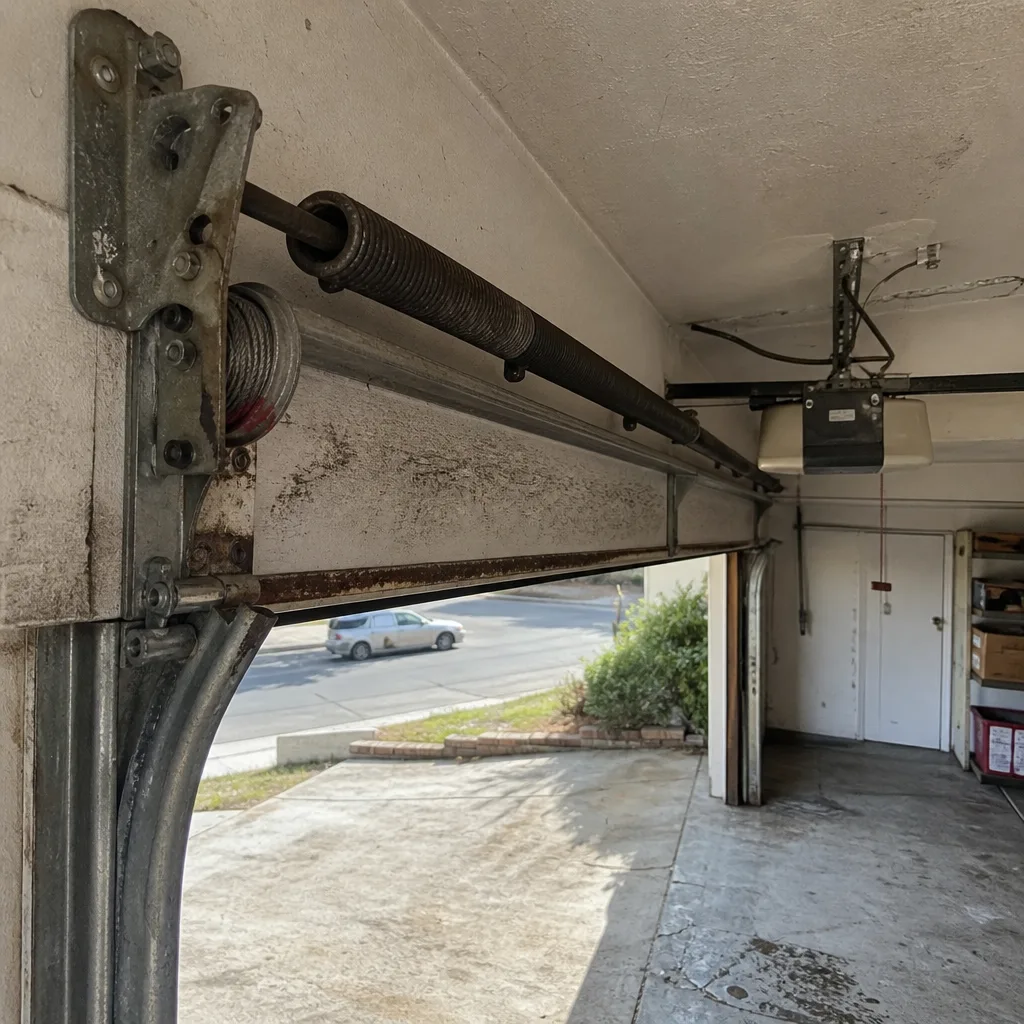 Before
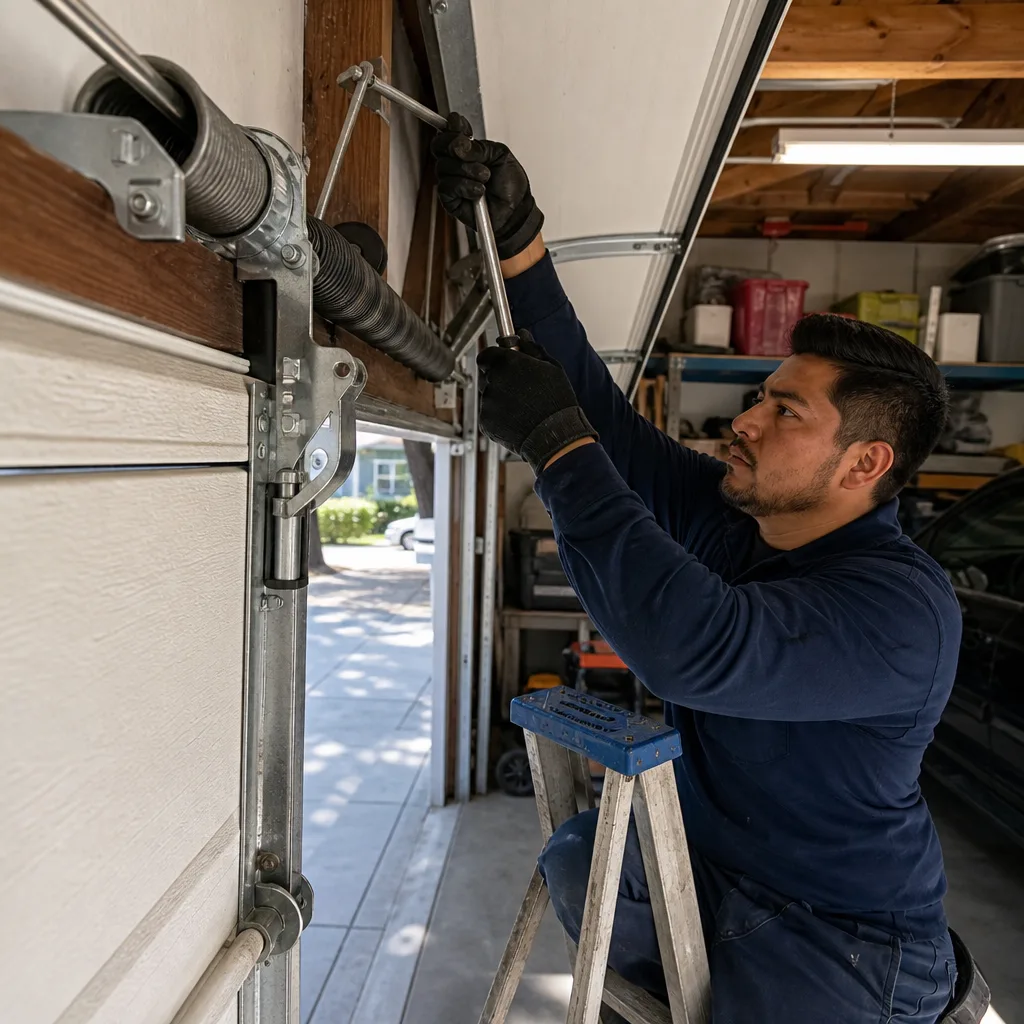 After
After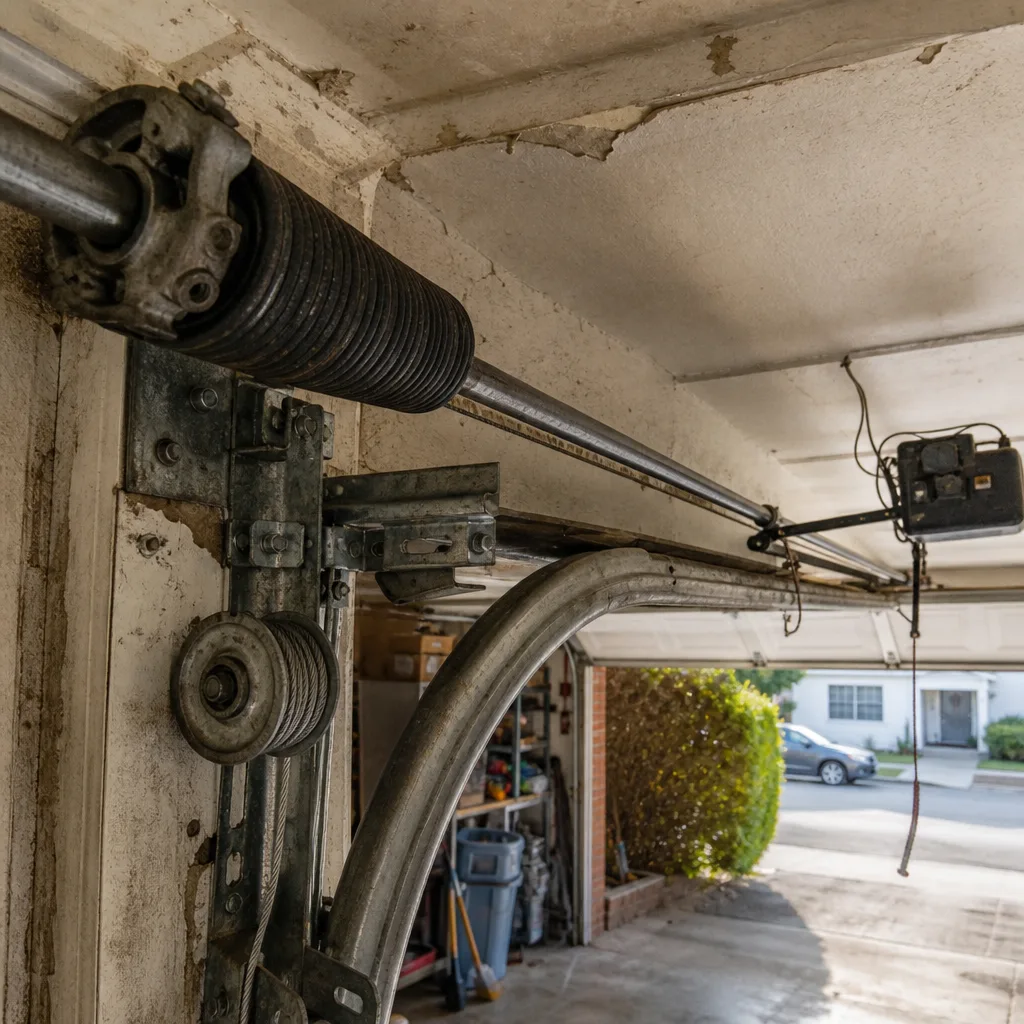 Before
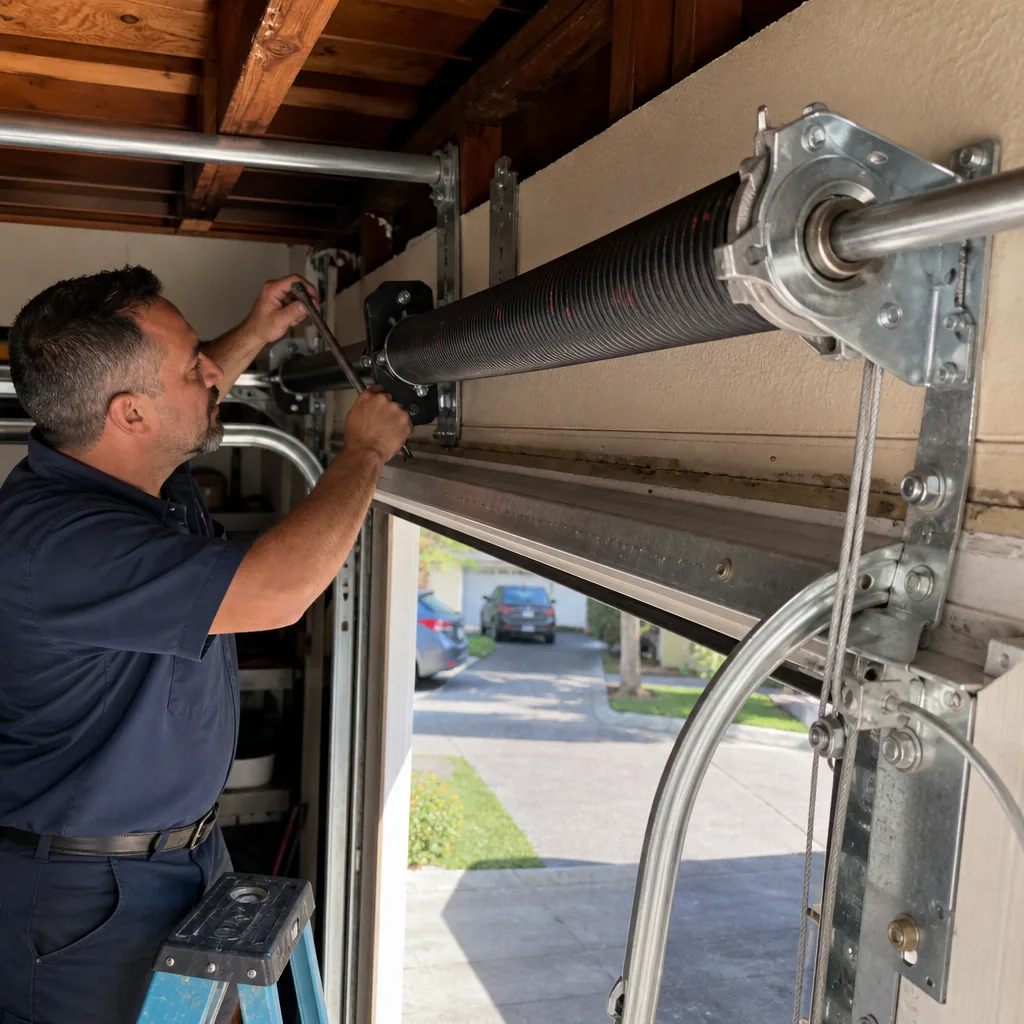 After
AfterGarage Door Repair Maintenance Checklist for North Hollywood Homeowners
A garage door that takes four seconds to open instead of three is already telling you something is wrong. Most homeowners in North Hollywood reset the force adjustment on the opener and miss the real cause - a worn cable drum that will snap within six months. In 42 years of working on doors across the San Fernando Valley, we have learned that the best maintenance checklist is not a list of tasks to perform, but a sequence of observations that reveal what is actually happening inside the system. This guide walks through what a working technician checks, in the order they check it, so you can spot trouble before it traps your car in the garage or worse. For professional help with any issues you discover, see our Garage Door Repair services.
Quick Answer
North Hollywood homeowners should inspect their garage door twice yearly: once in February after winter rains and before summer heat, and again in October before the rainy season. The essential checks are a 90-second balance test, visual inspection of cables and rollers, proper lubrication with white lithium grease on metal-to-metal contact points only, and listening for five distinct sounds that diagnose specific problems. Leave spring adjustments, cable reattachment, and any work on torsion assemblies to a trained professional - these components store lethal tension.
Table of Contents
- The Balance Test: The 90-Second Check That Predicts Everything
- The Five Sounds Your Door Makes (and What Each One Means)
- Lubrication: Where White Lithium Grease Belongs and Where It Destroys
- Seasonal Timing for North Hollywood: Why February Matters
- Visual Inspection Checklist: Rollers, Cables, and Hardware
- Opener Maintenance: Force Settings, Safety Reversals, and Travel Limits
- What to Leave Alone: High-Risk Tasks That Require a Professional
- Your Annual Maintenance Schedule for North Hollywood
The Balance Test: The 90-Second Check That Predicts Everything
The balance test is the single most revealing diagnostic you can perform on your garage door. It tells you the condition of your torsion or extension springs, the alignment of your track system, and whether your opener is working harder than it should. We perform this test on every service call in North Hollywood before we touch a single bolt, because an unbalanced door will destroy every other component prematurely.
Here is how to do it safely:
- Close the door fully and disconnect the opener by pulling the red emergency release cord. This puts the door in manual operation.
- Lift the door halfway by hand, using the handle if your door has one. Do not grip the sections themselves.
- Release the door smoothly. A properly balanced door will stay in place, drifting no more than a few inches either direction.
- If the door falls closed rapidly, the springs are under-tensioned or fatigued. If it shoots upward, they are over-tensioned.
- Repeat at the one-quarter and three-quarter open positions for confirmation.
What the result actually tells you: A door that falls has lost spring tension, usually from metal fatigue. In North Hollywood’s dry climate, springs typically last 8-12 years depending on cycle count, but we have replaced springs on 6-year-old doors in the Valley Village area where homeowners run multiple cycles daily. A door that rises on its own has dangerous excess tension that strains cables, drums, and the opener head. Both conditions mean the spring system needs professional attention - not a DIY adjustment.
The balance test also reveals track problems. If the door binds or sticks at a particular height, the vertical or horizontal tracks are likely out of plumb. North Hollywood’s expansive clay soils shift seasonally, and we see more track misalignment in the older ranch homes south of Burbank Boulevard than anywhere else in our service area. A binding door will eventually twist the top section and pop rollers out of the track.
Never attempt to adjust torsion springs yourself. The torque stored in a standard 16-foot residential spring can cause severe injury or death. If your balance test fails, call a professional. Garage Door Repair in North Hollywood is our core service, and we stock the common spring sizes for doors installed from the 1960s through today.
The Five Sounds Your Door Makes (and What Each One Means)
Your garage door is a mechanical system that communicates through sound. Learning to distinguish these five noises will let you diagnose problems before they become emergencies. In our experience across North Hollywood, from the hillside homes near Mulholland to the flat lots of NoHo Arts District, these sounds predict specific failures with remarkable consistency. Learn to recognize these warning signals in our companion piece, Garage Door Warning Signs: A North Hollywood Homeowner’s Reference Guide.
Grinding: A low, continuous grinding during opener operation usually means the main drive gear inside the opener head is stripping its nylon teeth. This happens when the door is unbalanced and the opener works overtime. The gear will fail completely, often at the worst moment. We carry replacement gears for LiftMaster, Chamberlain, Genie, and Craftsman openers on our trucks, but if you hear grinding, schedule service before the gear strips entirely.
Squealing: High-pitched squeal on opening or closing indicates metal-on-metal friction, typically at the rollers or the end bearing plates. Steel rollers without ball bearings are the usual culprit in older North Hollywood homes. The fix is lubrication with white lithium grease - not WD-40, which we will address in the next section. Persistent squealing after lubrication means the rollers are worn and need replacement.
Popping: A sharp pop or snap, usually when the door starts moving, is the sound of a section joint flexing under stress. This happens when hinges are loose or when a door panel has taken impact damage. In North Hollywood, we see this frequently on aluminum doors that have been backed into slightly - the damage looks minor but compromises the section’s rigidity. Left unaddressed, the panel will crack at the joint.
Rattling: Loose hardware throughout the system. Track brackets, opener mounting bolts, and hinge screws all loosen over thousands of cycles. The dry Santa Ana wind seasons in North Hollywood accelerate this by vibrating the door against slightly loose components. A rattling door will eventually throw a roller or separate a track bracket.
The Asymmetric Thunk: This is the sound of a door that is not moving evenly on both sides. One side hits the floor slightly before the other, producing a dull, uneven impact. It means one spring has failed or one cable has slipped on its drum. This is an urgent call - the remaining spring is carrying double load and will fail soon, and the door is torquing in its tracks with every cycle.
If you hear any of these sounds, note when they occur in the cycle and whether the door is moving up or down. This detail helps us diagnose before we arrive. Our Garage Door Opener in North Hollywood service includes full acoustic inspection as standard.
Lubrication: Where White Lithium Grease Belongs and Where It Destroys
Proper lubrication extends component life by years. Improper lubrication destroys components in months. The difference is knowing what product goes where, and more importantly, what never touches certain materials.
Use white lithium grease on:
- Hinge pins and hinge barrels - the pivot points where sections fold
- End bearing plates - the stationary plates at each end of the torsion tube
- Top fixture pulleys on extension spring systems
- Lock mechanism internals, if your door has a manual lock
Use silicone spray on:
- Weatherstripping - both bottom seal and perimeter vinyl or rubber seals
- Teflon-coated or nylon rollers - the silicone keeps the bearing surface clean without attracting dust
Never use WD-40 as a lubricant: WD-40 is a water displacement solvent, not a lubricant. It evaporates within days, leaving a gummy residue that attracts dust and grit. On hinges, this abrasive paste accelerates wear. We have replaced hinges in North Hollywood that were “maintained” with WD-40 every month and wore out faster than unmaintained hinges. If you have used WD-40 in the past, clean the residue with a degreaser before applying proper lubricant.
Never lubricate nylon rollers at all: Nylon rollers are self-lubricating. White lithium grease on nylon attracts dust that embeds in the material and turns into grinding compound. The rollers develop flat spots and bind in the track. If your door has nylon rollers - common on Clopay and Amarr doors from the last 15 years - leave them alone unless they are visibly damaged, in which case they need replacement.
Never lubricate the track: The track is not a bearing surface. Lubricant in the track collects dust and causes rollers to slip rather than roll. Clean tracks with a damp cloth only.
Never lubricate the spring: Torsion springs do not need lubrication, and attempting to apply it while the spring is under tension is dangerous. Some old-school guides recommend spring lubrication - this is outdated advice from the pre-galvanized spring era. Modern springs are coated at the factory.
In North Hollywood’s dusty environment, we recommend lubricating metal-to-metal points every six months, or every four months if your property borders construction or unpaved alleys. Apply sparingly - a thin film is sufficient. Excess lubricant drips on your car and collects more dust than it prevents.
Seasonal Timing for North Hollywood: Why February Matters
North Hollywood’s climate creates a specific maintenance window that most homeowners miss. February, after the winter rains and before the sustained heat of late spring, is the single annual inspection that catches 80% of developing problems. Here is why this timing matters.
Winter rains in the San Fernando Valley are modest but persistent enough to cause two issues: moisture intrusion at the bottom seal, and accelerated corrosion at the bottom fixtures and cable ends where road salt and standing water collect. By February, any corrosion from the rainy season is visible but has not yet progressed to failure. Wait until summer, and the dry heat accelerates the corrosion while you are not looking.
February is also when temperature swings are most extreme - overnight lows in the 40s, afternoon highs near 70. This thermal cycling stresses metal components at maximum rates. Springs that are near fatigue failure will often show the first crack or gap in their coils during this period. We schedule more spring replacements in late February and early March than any other six-week span.
The October inspection, before the rainy season, focuses on seal condition and drainage. North Hollywood’s flat lots in the NoHo Arts District and areas near the Los Angeles River channel are prone to brief flooding during heavy winter storms. A compromised bottom seal lets water into the garage, and more critically, into the bottom section of the door where it accelerates rust on steel-backed insulation.
Our $89 Seasonal Tune-Up, available year-round, includes full balance testing, lubrication, safety reversal checks, and hardware torque verification. Many North Hollywood homeowners book the February appointment annually and treat the October check as a self-inspection with our checklist. Either approach works; skipping both does not.
Visual Inspection Checklist: Rollers, Cables, and Hardware
The visual inspection takes ten minutes and requires no tools beyond a flashlight and steady footing. Perform it monthly, or weekly if your door sees heavy use. Work methodically from bottom to top, one side at a time.
Bottom section and seal:
- Check the rubber or vinyl bottom seal for cracks, flattening, or separation from the retainer. A failed seal lets in dust, water, and pests.
- Inspect the bottom fixtures - the brackets where cables attach - for rust, bending, or loose fasteners. These brackets carry the full door weight and are the most stressed hardware on the system.
- Look for water staining or efflorescence on the concrete beneath the closed door, indicating seal failure.
Cables:
- Examine the lift cables for fraying, kinking, or broken strands. Even one broken strand means the cable is compromised and will fail progressively.
- Check cable routing over the drums at the top of the door. The cable should seat cleanly in the drum grooves without overlapping or gaps.
- Look for rust bloom on the cable, especially near the bottom loop where moisture collects.
Rollers and hinges:
- Steel rollers should turn freely without wobble. A roller that does not rotate slides in the track and will wear flat.
- Nylon rollers should show no cracks, chips, or flat spots. The stem should not wobble in the hinge.
- Hinges should be tight to the door sections with no visible cracks. The pin should not rise above the hinge barrel.
Track system:
- Vertical tracks must be plumb - use a level if you have one, or sight along the track edge for obvious lean.
- Horizontal tracks should slope slightly toward the opener end, typically 1/4 inch per foot, to prevent the door from rolling backward.
- Track brackets must be tight to the wall framing. Loose brackets let the track flex and throw rollers.
Spring assembly:
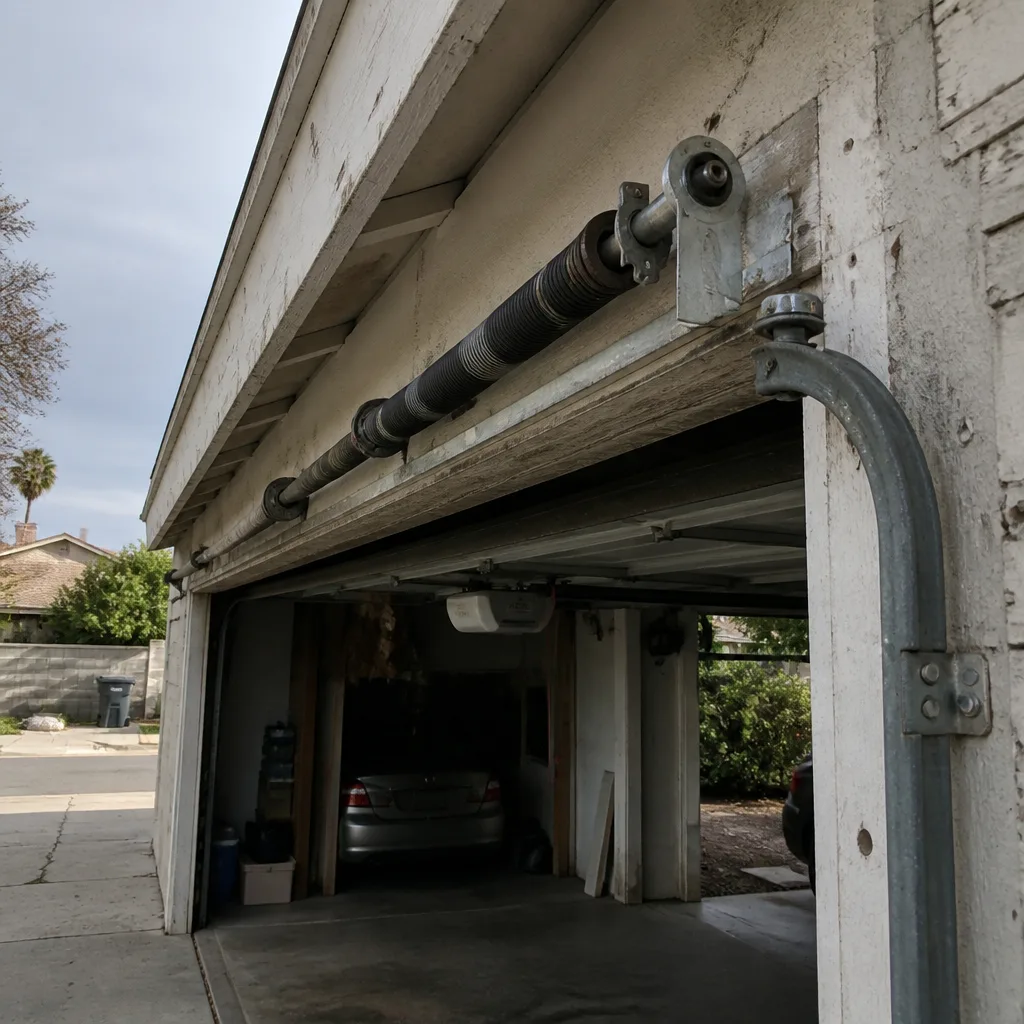
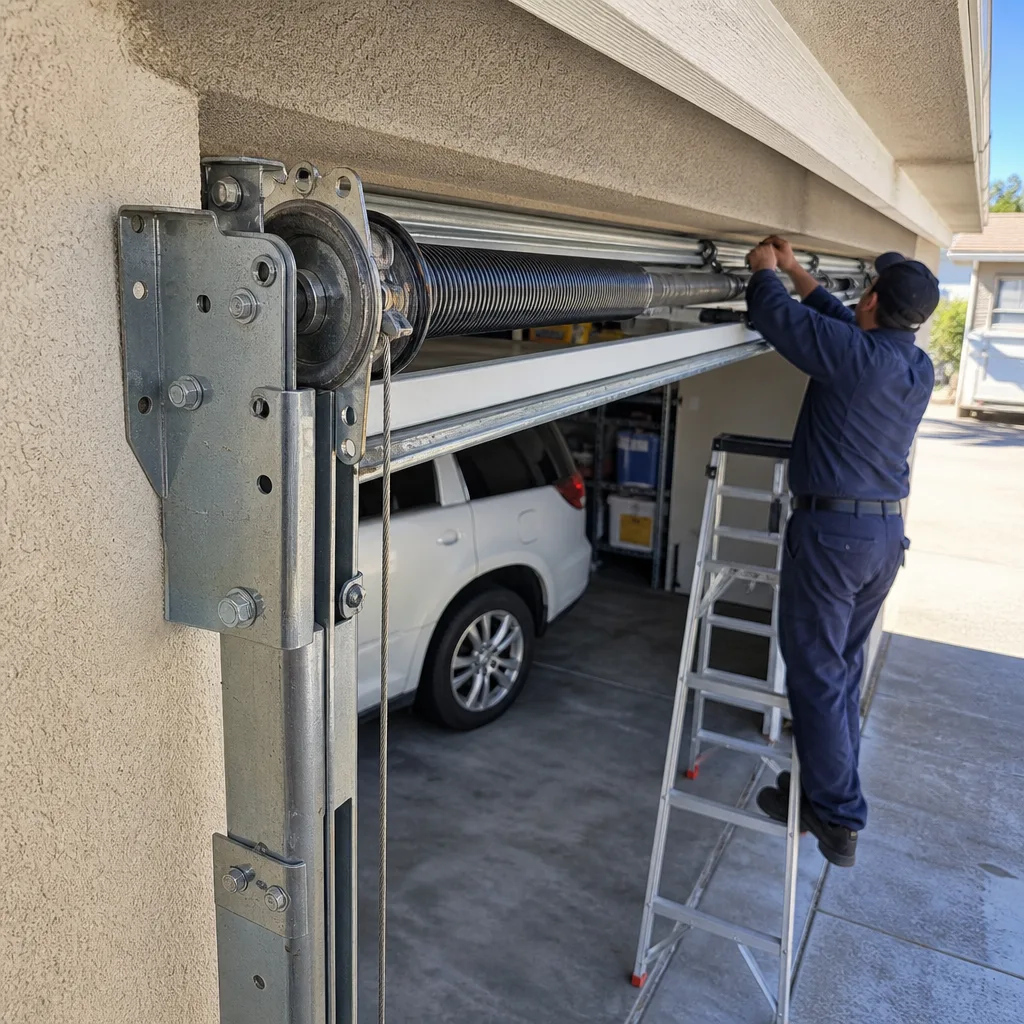
- Look for gaps in torsion spring coils, indicating a broken inner strand. The spring may still function but is near failure.
- Check the stationary and winding cones for cracks or shifting on the torsion tube.
- On extension spring systems, inspect the safety cables that thread through the springs. These contain a broken spring; without them, the spring becomes a projectile.
Do not touch the spring assembly during inspection. Observation only. If you see any of the above warning signs, Mainspring Garage Door Co. home service includes same-day response for cable and spring issues in North Hollywood.
Opener Maintenance: Force Settings, Safety Reversals, and Travel Limits
Garage door openers are not maintenance-free. The force and travel settings drift over time, and the safety reversal system requires regular verification. In North Hollywood, where many homes still run 15-20 year old chain-drive openers, these checks prevent both property damage and injury.
Force settings: The opener has two force adjustments, one for opening and one for closing. These determine how much resistance triggers reversal. Test them with the door disconnected from the opener - the door should move freely by hand with no binding. If the door moves smoothly but the opener struggles, the force is set too low and the motor is overworking. If the opener does not reverse on reasonable resistance, the force is dangerously high. Never increase force to compensate for a sticking door - fix the door instead.
Safety reversal test: Place a 2×4 board flat on the floor centered under the door path. Close the door using the opener. It must reverse within 2 seconds of contact with the board. If it does not, the down-force is set too high or the optical sensors are misaligned. Federal law (UL 325) requires this function; a non-reversing opener is a liability hazard.
Photoelectric sensors: The two sensors near the floor should face each other with indicator lights steady (not blinking). Clean lenses with a soft cloth - North Hollywood’s dust and occasional smog film reduce sensitivity. Verify alignment by slowly passing a broom handle through the beam while the door is closing; it should reverse immediately.
Travel limits: The door should stop at the same fully open and fully closed positions consistently. Drifting limits indicate worn limit switches in older openers or programming issues in newer models. A door that does not fully close leaves a gap for weather and security intrusion. A door that over-travels in the open position stresses the opener and can bend the top section.
Modern openers from LiftMaster and Chamberlain include force-learning features that self-adjust, but the safety reversal still needs manual verification. If your opener predates 1993, it likely lacks photoelectric sensors entirely - we strongly recommend replacement, as these units do not meet current safety standards and most manufacturers no longer support them with parts.
What to Leave Alone: High-Risk Tasks That Require a Professional
Some maintenance tasks appear simple but carry genuine injury risk. We include this section because we have seen the aftermath of well-intentioned DIY attempts in North Hollywood, and because a steady, plainspoken guide tells you the whole truth. If you do need to hire a professional, read How to Hire a Garage Door Contractor in North Hollywood: A Step-by-Step Guide first.
Torsion spring adjustment or replacement: A standard residential torsion spring stores enough torque to cause severe laceration, amputation, or death. The winding bars must be inserted properly, the set screws released in controlled sequence, and the new spring tensioned to exact specification. We have responded to emergency calls where a homeowner’s winding bar slipped, launching it through a garage wall. This is not a metaphor - it happens. Our technicians carry two sets of winding bars and use a specific protocol developed over 42 years.
Cable detachment or reattachment: Lift cables are under tension even when the door is closed, because the springs are pre-tensioned to balance the door weight. Attempting to reseat a cable on its drum without proper tools and knowledge releases this tension unpredictably. The cable can whip with enough force to break bone.
Bottom fixture removal: The bottom brackets attach to the cable and are under constant spring tension. Never remove these brackets to replace a bottom seal or repair a dented bottom section. The bracket must be clamped or the spring tension released first.
Track realignment: While minor bracket tightening is reasonable DIY, bending or repositioning track requires understanding of door geometry. Improperly aligned track causes the door to bind, which then damages sections, hinges, and the opener. The track must be plumb within 1/4 inch and the door must sit square in the opening.
Extension spring containment: If you have extension springs along the horizontal tracks, the safety cables through their centers are critical. Never remove or reroute these cables. If a spring breaks without containment, it can travel 20 feet with lethal force.
For any of these tasks, our Garage Door Installation in North Hollywood and repair teams arrive with the correct tools, parts, and training. The flat price is stated before any work begins, and every job carries our 90-Day Done Right Promise in writing.
Your Annual Maintenance Schedule for North Hollywood
Consistency matters more than perfection. This schedule spreads tasks across the year so no single session overwhelms you.
February (Primary Inspection):
- Perform the 90-second balance test. Document the result.
- Full visual inspection per the checklist above.
- Lubricate metal-to-metal contact points with white lithium grease.
- Test opener safety reversal with 2×4 board.
- Clean photoelectric sensor lenses and verify alignment.
- Schedule professional tune-up if balance test fails or any component shows wear.
May (Secondary Check):
- Listen for new sounds during five consecutive cycles.
- Inspect bottom seal for heat damage or hardening.
- Verify door seals properly against frame - summer heat expands materials and can reveal gaps.
- Check remote battery strength; replace if range has decreased.
October (Pre-Rain Preparation):
- Inspect bottom seal and drainage path for winter readiness.
- Check weatherstripping on frame for gaps that let wind-driven rain enter.
- Verify heater or stored items near door do not obstruct safety sensors.
- Test backup battery on opener if equipped - power outages increase in winter storm season.
Monthly (Ongoing):
- Visual scan of cables, rollers, and hardware while door operates.
- Clear track of debris - leaves in fall, dust year-round.
- Test wall button and remotes for consistent response.
North Hollywood’s specific conditions - dry summers, occasional heavy winter rains, clay soil movement, and dust from construction and the nearby 170 freeway - make this schedule more important than in milder climates. The homeowners we serve longest are those who treat garage door maintenance as routine, like checking smoke detector batteries. For more guides & resources on keeping your door running smoothly, explore our blog.
Common Mistakes to Avoid
- Using WD-40 on hinges and rollers. WD-40 is a solvent, not a lubricant. It evaporates and leaves an abrasive residue that accelerates wear. We replace more prematurely worn hinges in North Hollywood from this single mistake than from any other cause.
- Adjusting opener force to compensate for a heavy door. A door that strains the opener needs spring adjustment or replacement, not more force. Increasing force masks the problem until the opener fails catastrophically or the safety reversal becomes non-functional.
- Ignoring small sounds until they become loud problems. The asymmetric thunk that becomes a cable snap usually gives two weeks of warning. The grinding gear gives a month. Waiting turns a $200 repair into a $600 replacement.
- Lubricating nylon rollers or the track. Nylon rollers are self-lubricating; grease attracts dust that destroys them. The track is not a bearing surface; lubricant causes rollers to slip and flat-spot.
- Skipping the balance test because the door “seems fine.” An unbalanced door overworks the opener, wears cables unevenly, and eventually twists in the tracks. The test takes 90 seconds and reveals problems before they become visible.
- Attempting spring or cable work after watching a video. Video tutorials rarely show the accidents. The physics of stored spring energy do not forgive mistakes. In North Hollywood, we have treated this as an emergency call more times than we can count.
- Neglecting the October inspection because “it never rains much.” When North Hollywood does get heavy rain, it often comes in concentrated winter storms. A failed seal during one of these events can flood a garage and damage stored items before you notice.
When to Call a Professional
Call a trained technician when the balance test fails, when you hear the asymmetric thunk, when cables show any fraying, when the opener safety reversal does not function, or when springs show gaps or damage. These are not maintenance tasks - they are repair needs that carry injury risk.
We also recommend professional service when your door is more than 15 years old and has never had a comprehensive inspection. Many North Hollywood homes built in the 1960s through 1980s still have original hardware that has exceeded its design life. A technician can assess whether components are near failure and recommend prioritized replacement before an emergency.
Mainspring Garage Door Co. offers free estimates in North Hollywood - call (747) 239-5578. Our trucks carry springs, cables, rollers, and openers for all major brands including Clopay, Amarr, Wayne Dalton, and Craftsman. Most jobs are completed in a single visit, and the flat price is stated before any work begins. Every completed job is covered by our 90-Day Done Right Promise, in writing, with no dispute process.
Frequently Asked Questions
Professional maintenance typically runs $89-$150 for a seasonal tune-up that includes balance testing, lubrication, safety checks, and hardware inspection. Our Seasonal Tune-Up is $89 and covers all standard maintenance tasks. Repairs found during maintenance are quoted separately with upfront pricing before any work begins. Call (747) 239-5578 for an exact quote - estimates are free.
Perform basic visual and listening checks monthly. Conduct the full balance test, lubrication, and safety reversal test twice yearly - we recommend February and October for North Hollywood’s climate. Schedule professional service annually or immediately if any check reveals a problem. The dry, dusty summers and occasional heavy winter rains here make this schedule more important than in milder climates.
Yes, for observation, lubrication of accessible metal-to-metal points, cleaning sensors, and testing safety functions. No, for any work involving springs, cables under tension, or bottom fixtures. These components store lethal energy and require specific tools and training. We have responded to emergency calls in North Hollywood from homeowners who attempted spring adjustment after online research. The risk is not worth the savings.
No. At Mainspring Garage Door Co., the flat price is stated before any work begins. If our technician finds additional issues during a maintenance visit, we explain them and quote separately. You approve every repair before it starts. There are no surprises on the bill. This is our standard practice, not a special offer.
Yes. Our trucks are stocked with springs, cables, rollers, hinges, openers, and hardware for all major brands including LiftMaster, Chamberlain, Genie, Clopay, Amarr, Wayne Dalton, Craftsman, and Raynor. Most maintenance-related repairs are completed in a single visit. If your door has an unusual configuration, we order the specific part and return promptly - but this is rare.
If any work we perform is not right, we return at no charge and make it right. This is stated in writing on every job, with no paperwork to file and no dispute process. We have honored this promise for 42 years. It is not insurance or a warranty with exclusions - it is our word that the job was done right, and our commitment to fix it if it was not.
The Bottom Line
Garage door maintenance is not a list of tasks to perform blindly. It is a sequence of observations - balance, sound, sight, and touch - that reveal what is actually happening inside a system that weighs several hundred pounds and moves under stored mechanical energy. The North Hollywood homeowner who learns the 90-second balance test, distinguishes the five sounds, lubricates correctly, and respects the components that can cause serious injury will avoid emergencies, extend system life, and never face a surprise bill.
The February inspection catches problems before summer heat accelerates them. The October check seals out winter rain. Monthly observation takes five minutes and builds the awareness that prevents the 6 AM discovery of a door that will not open for work. Maintenance is steady, unhurried work - the kind we have built our business on for 42 years.
Call (747) 239-5578 for a free estimate on maintenance, repair, or replacement. A live person answers every call, 24 hours a day. Our technicians arrive with the right parts, state the flat price upfront, and stand behind every job for 90 days. That is a square deal, and it is how we have served North Hollywood since 1984.
Written by Carl Dutton, Owner at Mainspring Garage Door Co., serving North Hollywood since 2016.